
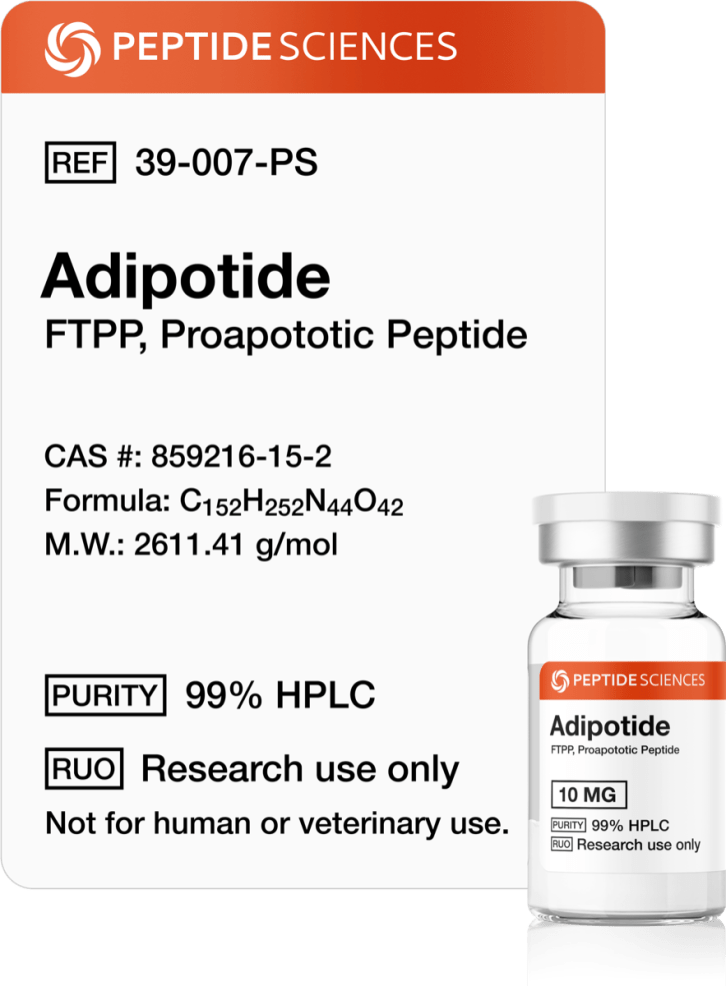
Adipo Adipotide FTPP 10mg
$89.00
PRODUCT SHORT DESCRIPTION
Adipotide (FTPP) 10mg is a premium, high-purity synthetic peptidomimetic engineered for advanced metabolic, adipocyte apoptosis, and targeted vascular disruption research. This 10,000mcg configuration provides an exceptionally precise biochemical tool for investigating prohibitin-targeted cell death and fat tissue neovascularization kinetics.
Meta Title: Adipo Adipotide FTPP 10mg | Research Peptide
Meta Description: Buy adipo Adipotide FTPP 10mg for laboratory research. Explore prohibitin targeting, ≥99% purity, preclinical studies, storage, related compounds, and FAQs.
Adipo Adipotide FTPP 10mg – Research Peptide
Introduction to Adipo Adipotide 10mg
Adipotide, biochemically designated as FTPP or pro-apoptotic peptide (PAP), is a highly specialized synthetic peptidomimetic platform engineered for intensive investigation within endocrinology, vascular biology, and advanced metabolic research.
Structurally configured as a chimeric peptide construct, Adipotide features two distinct functional domains: a targeted homing sequence ($\text{CKGGRAKDC}$) linked to a pro-apoptotic mitochondrial-disrupting domain ($\text{D(KLAKLAK)}_2$). This dual-domain design serves as a molecular probe to study selective disruption of the microvascular networks supporting white adipose tissue (WAT).
For researchers searching adipo compounds, Adipotide represents a highly specialized vascular-targeting research peptide rather than a conventional appetite-signaling or incretin compound.
Unlike traditional metabolic modifiers that rely on systemic central nervous system stimulation or alteration of global satiety hormones, Adipotide is engineered to investigate localized, tissue-specific vascular targeting. By interacting with prohibitin-associated vascular markers found in white adipose tissue models, the compound allows investigators to examine programmed endothelial cell death and subsequent adipose-tissue remodeling.
At USA PEPTIDE SCIENCES, we supply this advanced adipo vascular-targeting research tool as a premium 10mg lyophilized vial, providing molecular biology, pathology, and metabolic research institutions with an ultra-pure standardized material for controlled experimental investigation.
Adipo Research Overview: Prohibitin Targeting and Adipose Vascular Models
The primary scientific value of Adipotide 10mg centers on its ability to investigate relationships between adipose-tissue volume and the vasculature supporting white adipose deposits.
By triggering targeted endothelial apoptosis in preclinical models, this adipo research compound allows investigators to study vascular regression, adipose-tissue remodeling, mitochondrial disruption, and downstream metabolic adaptation.
Adipo Adipotide Research Applications
Key areas of active scientific investigation utilizing Adipotide 10mg include:
- Prohibitin Targeting and Vascular Homing: Modeling the interaction between the CKGGRAKDC homing sequence and prohibitin-associated vascular markers. Researchers study how this domain selectively homes toward vascular structures associated with white adipose tissue.
- Mitochondrial Membrane Disruption and Programmed Cell Death: Investigating the intracellular apoptosis cascade associated with the $\text{D(KLAKLAK)}_2$ structural sequence. Following internalization into targeted endothelial cells, researchers evaluate mitochondrial membrane disruption, cytochrome-c signaling, and downstream caspase-associated pathways.
- Adipocyte Atrophy and Tissue Remodeling: Analyzing the secondary consequences of reduced vascular support on surrounding white adipose tissue in preclinical models. This adipo pathway is investigated as a distinct mechanism from conventional appetite or endocrine signaling.
- Metabolic Homeostasis and Biomarker Kinetics: Tracking metabolic adaptations following adipose regression in experimental models, including insulin-associated signaling, glucose-response parameters, circulating lipid profiles, and related biomarkers.
- Renal Filtration and Preclinical Tolerability: Evaluating renal proximal-tubule responses observed in animal research to better characterize compound clearance, exposure-response relationships, and experimental tolerability thresholds.
Researchers studying adipo, Adipotide FTPP, prohibitin targeting, vascular apoptosis, and adipose-tissue biology can review Adipotide and metabolic research literature on PubMed for relevant peer-reviewed publications.
Adipotide FTPP Compound Profile and Functional Architecture
To support repeatable analytical trials, the structural layout of Adipotide FTPP 10mg incorporates two functional research domains:
- Homing Sequence: A cyclic peptide configuration ($\text{CKGGRAKDC}$) featuring a disulfide bridge and studied for targeting prohibitin-associated vascular structures.
- Pro-Apoptotic Sequence: An all-D-amino-acid configuration ($\text{D(KLAKLAK)}_2$) designed for resistance to proteolytic degradation and investigation of mitochondrial membrane disruption.
Adipo Research Specifications
- Compound: Adipotide
- Alternative designation: FTPP
- Research class: Chimeric / targeted pro-apoptotic peptide
- Homing sequence: CKGGRAKDC
- Pro-apoptotic domain: D(KLAKLAK)₂
- Quantity: 10mg
- Format: Lyophilized research peptide
- Purity: ≥99%
- Testing: HPLC and Mass Spectrometry
- Primary research focus: Prohibitin-associated vascular targeting and adipose-tissue models
- Intended use: Laboratory research only
Adipo Quality Standards & Analytical Testing
At USA PEPTIDE SCIENCES, laboratory data integrity and compound reproducibility are the fundamental core of our manufacturing operations.
Every production lot of Adipotide FTPP 10mg undergoes a strict quality-control validation protocol to reduce experimental variability. We utilize High-Performance Liquid Chromatography (HPLC) coupled with Mass Spectrometry (MS) to confirm a chemical purity profile of 99% or greater.
This analytical validation evaluates the chimeric sequence layout, molecular identity, structural characteristics, and compound purity while screening for unwanted synthesis-related impurities and contaminants.
A batch-specific Certificate of Analysis (COA) accompanies each order to support research traceability and reproducibility.
For researchers evaluating adipo pathway compounds, standardized analytical verification is particularly important when investigating multi-domain peptide constructs such as Adipotide.
Adipo Adipotide Storage and Handling Requirements
To safeguard the structural integrity of the 10mg lyophilized research material, Adipotide vials should be stored long-term at -20°C, protected from light and ambient moisture.
Prior to laboratory use, reconstitution should be conducted using an appropriate sterile research diluent under controlled experimental conditions.
Once transitioned into solution, the peptide should be maintained under refrigeration between 2°C and 8°C. Researchers should use gentle swirling during dissolution and avoid aggressive mechanical agitation or shaking.
Adipotide Peptide Benefits in Research Models
The search phrase adipotide peptide benefits should be understood strictly in the context of experimental research.
Research interest includes:
- Prohibitin-associated vascular targeting
- White-adipose-tissue vascular biology
- Endothelial apoptosis
- Mitochondrial disruption pathways
- Adipose-tissue remodeling
- Insulin-associated metabolic signaling
- Lipid-metabolism research
- Preclinical renal-response characterization
These adipo research areas do not establish human fat-loss, metabolic, therapeutic, or health benefits.
Related Adipo and Metabolic Research Compounds
Researchers studying adipo pathways or comparing Adipotide with alternative metabolic research mechanisms may also explore:
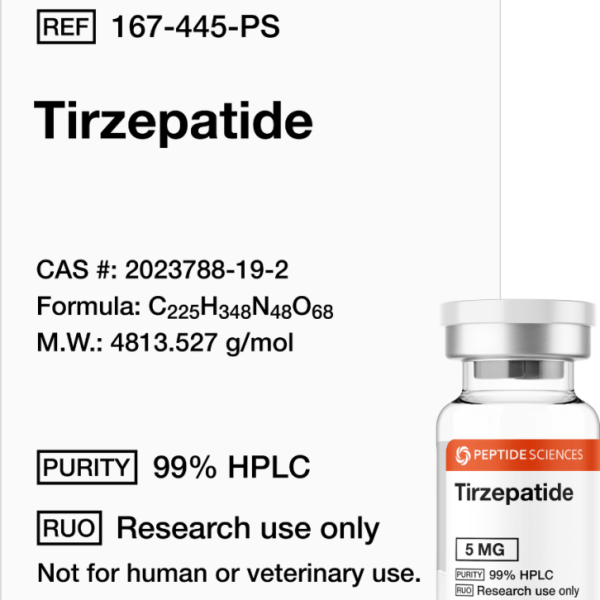
- Adipo comparison – Tirzepatide 10mg research peptide — related metabolic research peptide investigated through GIP and GLP-1 receptor pathways.
- Adipo comparison – Tesofensine 500mcg research capsules — related small-molecule research compound for comparative metabolic and neurochemical pathway studies.
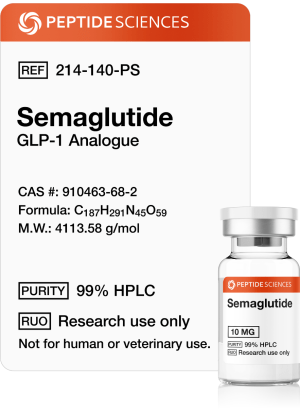
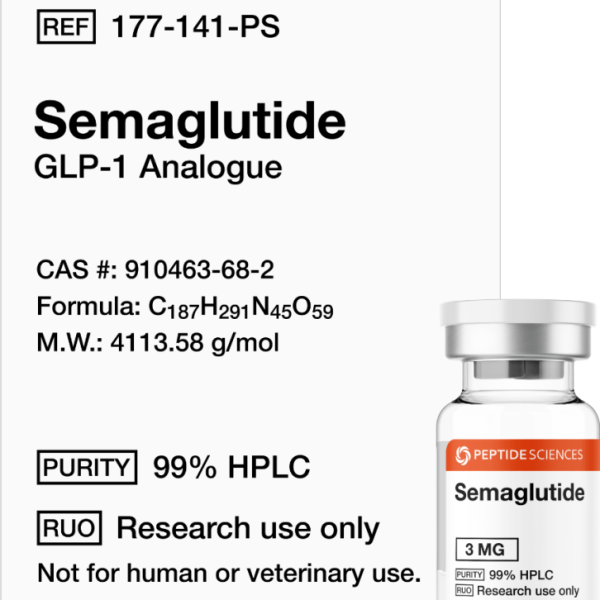
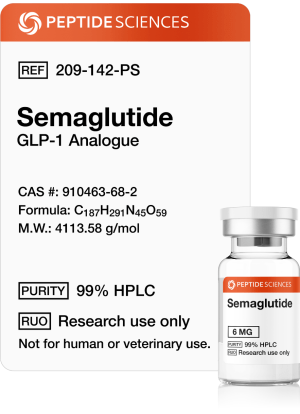
- Adipo comparison – Semaglutide 6mg research peptide — GLP-1 receptor research peptide for comparative endocrine and metabolic pathway investigation.
These compounds operate through mechanisms distinct from the prohibitin-targeted vascular approach investigated with Adipotide.
Adipo Adipotide FAQ
What is adipo?
Within the context of this product page, adipo refers to Adipotide/FTPP, a targeted pro-apoptotic research peptide investigated in adipose-tissue vascular models.
The term “adipo” can have broader meanings elsewhere in biology, so it should not automatically be treated as a synonym for Adipotide outside this research context.
What is Adipotide FTPP?
Adipotide FTPP is a chimeric research peptide combining the CKGGRAKDC vascular-homing sequence with the pro-apoptotic D(KLAKLAK)₂ domain.
What does FTPP mean?
FTPP is a designation commonly associated with Adipotide as a fat-targeted pro-apoptotic peptide research construct.
What does adipo target in research models?
The adipo Adipotide platform is investigated for targeting prohibitin-associated vascular structures within white adipose-tissue models.
What is the Adipotide homing sequence?
The vascular-homing domain used in Adipotide research is CKGGRAKDC.
What is the pro-apoptotic sequence in Adipotide?
The pro-apoptotic domain is D(KLAKLAK)₂, an all-D-amino-acid sequence investigated for mitochondrial membrane disruption following delivery into targeted cells.
What are adipotide peptide benefits?
The phrase adipotide peptide benefits refers to areas of experimental interest such as adipose vascular targeting, endothelial apoptosis, adipose remodeling, metabolic signaling, and mitochondrial pathways.
It should not be interpreted as evidence of human therapeutic or weight-loss benefits.
What are adipotide human trials?
The phrase adipotide human trials refers primarily to an early first-in-human Phase I investigation involving PROHIBITIN-TP01/Adipotide in patients with advanced prostate cancer and obesity.
Human research remains very limited, and the available evidence does not establish Adipotide as a safe or effective human weight-management therapy.
Has Adipotide been studied in animals?
Yes. Adipotide has been investigated in multiple preclinical models, including rodents and obese nonhuman primates, for prohibitin-targeted adipose-vascular research.
Was kidney function investigated in Adipotide research?
Yes. Preclinical primate research reported dose-dependent changes involving renal proximal-tubule function. These findings are an important part of the experimental safety and toxicology profile and should not be omitted when discussing Adipotide research.
Is adipo the same as Semaglutide or Tirzepatide?
No. Adipo Adipotide research focuses on targeted adipose vasculature, whereas Semaglutide 6mg is studied through GLP-1 receptor signaling and Tirzepatide 10mg through GIP and GLP-1 receptor pathways.
Is Adipotide available as 10mg?
Yes. USA Peptide Sciences supplies the adipo Adipotide FTPP compound as a 10mg lyophilized research vial.
What purity is Adipotide 10mg?
The supplied specifications state that Adipotide has a purity profile of 99% or greater, analyzed using HPLC with Mass Spectrometry used for compound identity verification.
Does Adipotide include a Certificate of Analysis?
Yes. According to the supplied specifications, each adipo Adipotide research order includes batch-specific Certificate of Analysis documentation.
How should Adipotide be stored?
According to the supplied storage requirements, Adipotide should be stored at -20°C while lyophilized and protected from light and moisture. Following controlled laboratory reconstitution, the material should be refrigerated between 2°C and 8°C.
Can researchers find Adipotide studies on PubMed?
Yes. Researchers can review Adipo and Adipotide scientific research on PubMed for publications involving prohibitin targeting, adipose vasculature, endothelial apoptosis, metabolic biology, and related preclinical pathways.
Is Adipotide intended for human use?
No. Adipo Adipotide FTPP supplied by USA Peptide Sciences is designated strictly for laboratory and in-vitro scientific research.
It is not intended for human or veterinary consumption, weight-loss use, therapeutic administration, clinical diagnostics, or any other human application.
Adipo Adipotide FTPP 10mg Research Use Disclaimer
The compounds distributed by USA PEPTIDE SCIENCES, including Adipotide FTPP 10mg research vials, are designated strictly for laboratory research purposes only.
Under no circumstances are these products approved or intended for human or veterinary consumption, direct clinical diagnostics, weight-management treatment, or therapeutic drug administration.
All handling, measuring, and experimental evaluation must be conducted exclusively by qualified scientific professionals within an appropriate laboratory research environment.
Marlene –
First time using this vascular-targeting peptide in research and I’m impressed. Support walked me through handling and reconstitution. Within the research timeframe, I observed the expected effects on adipose vasculature consistent with the established mechanism . The 10mg vial provided enough for my research cycles. Great product from a reliable vendor.
Barney –
Kacey –
Disappointed with this one. The product arrived but the results were underwhelming. I reached out for more details on the research base but didn’t get a clear explanation. I’ve since read that adipotide is research-only and unapproved, with no clinical development program active . The prohibitin target that allows the peptide to find fat tissue blood vessels also damages kidney blood vessels . This is not an incidental side effect—it results from the same binding mechanism that produces the fat loss, making it inherently difficult to separate efficacy from toxicity . The lack of established protocols for the 10mg dose in my specific research model made this a tricky tool to work with. I might try a different research approach next time.
Jalen –
I’ve been following the adipose-vascular targeting literature and this adipotide formulation is exactly what I needed. The support team was responsive, confirming this is a pro-apoptotic peptidomimetic designed to destroy the blood supply feeding white fat by targeting prohibitin on endothelial cells . Shipping was prompt with documentation showing ≥99% purity by HPLC . I’ve observed consistent results in my models, with the expected effects on adipose tissue blood vessels. The compound remains strictly for in-vitro laboratory research use only, not for human consumption . Top-tier product.
Skyla –
I’ve researched several vascular-targeting compounds and this adipotide stands out for its unique mechanism. The team answered my questions about the research literature, noting the originally described sequence is CKGGRAKDC-GG-D(KLAKLAK)2 with a molecular weight of approximately 2,694 Da . Shipping was fast with secure packaging. The peptide has performed consistently in my research protocols. Will definitely reorder.