
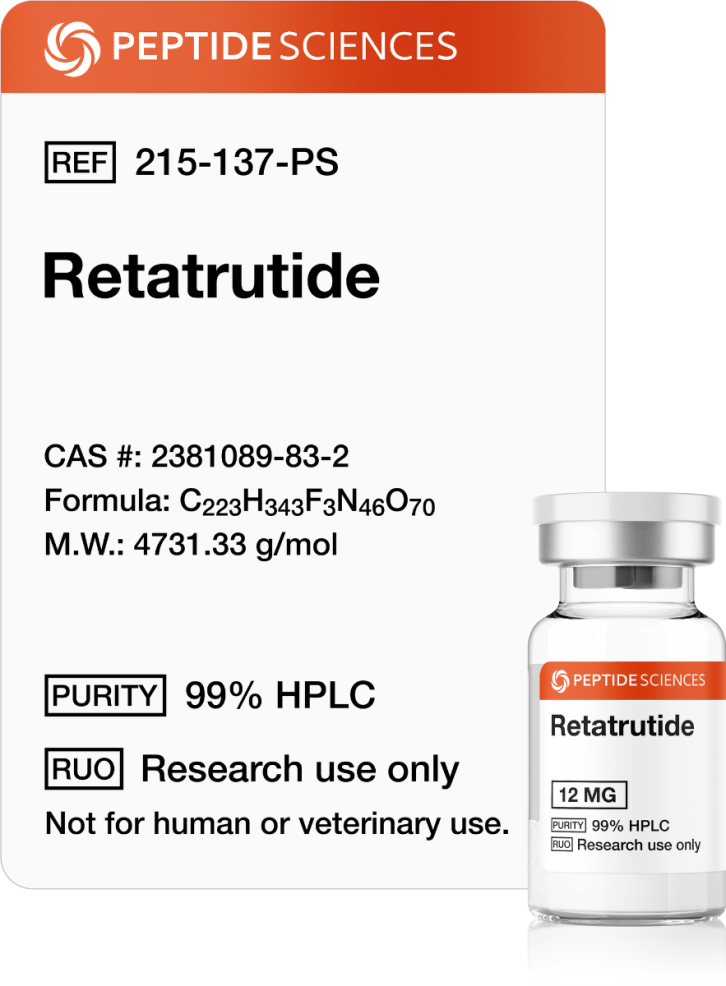
Retatrutide Peptide 12mg
$230.00
PRODUCT SHORT DESCRIPTION
Retatrutide 12mg is an advanced, synthetic single-peptide multi-agonist engineered to simultaneously target the GIP, GLP-1, and glucagon receptors. This mid-to-high tier 12mg formulation provides an exceptional baseline concentration for investigating triple-hormone receptor synergy, longitudinal metabolic flux, and accelerated cellular bioenergetics.
Retatrutide Peptide Science 12mg – Research Peptide
Introduction to Retatrutide Peptide Science 12mg
The Retatrutide 12mg configuration represents a precise, high-resolution standard for advanced investigative research into multi-receptor incretin mimetics and endocrine pathways. As a synthetic 39-amino acid peptide, Retatrutide acts as a single-sequence multi-agonist with targeted structural affinity for three distinct metabolic pathways: the Gastric Inhibitory Polypeptide (GIP) receptor, the Glucagon-Like Peptide-1 (GLP-1) receptor, and the Glucagon receptor (GCGR).
At USA PEPTIDE SCIENCES, we supply this highly innovative compound as a 12mg lyophilized matrix, engineered specifically to support long-term automated assays, multi-subject cohorts, and stable continuous baseline trials within advanced endocrinology workflows.
For laboratories investigating retatrutide peptide science, this 12mg format provides a standardized material for controlled triple-receptor signaling, metabolic, hepatic, and endocrine pathway studies.
Retatrutide Peptide Science Research Overview: Triple-Receptor Agonism and Metabolic Flux
The primary scientific value of Retatrutide 12mg relies on its balanced molecular architecture. The peptide backbone is modeled after the native GIP sequence, heavily modified with specific amino acid substitutions and conjugated to a C20 fatty diacid side chain via a hydrophilic spacer. This sophisticated engineering ensures exceptional structural stability and an extended pharmacokinetic half-life in research models.
By engaging three independent metabolic axes simultaneously, retatrutide peptide science provides a comprehensive framework for studying systemic energy regulation.
Retatrutide Peptide Science Research Applications
Key areas of active laboratory investigation utilizing the 12mg formulation include:
- Triple-Receptor Co-Activation Dynamics: Evaluating competitive binding kinetics and downstream intracellular signaling cascades associated with concurrent activation of GIP, GLP-1, and glucagon receptors.
- Mitochondrial Biogenesis and Thermogenesis: Investigating how the glucagon-receptor activation arm influences oxygen consumption and energy expenditure at the cellular level, particularly within brown-adipose-tissue research models.
- Pancreatic Beta-Cell Transcription: Modeling the synergistic impact of paired GIP and GLP-1 agonism on glucose-dependent insulin synthesis and adaptive insulin-secretory profiles.
- Hepatic Lipid Homeostasis and MASH Models: Tracking alterations in liver tissue, including intrahepatic lipid accumulation and metabolic pathways associated with metabolic dysfunction-associated steatohepatitis.
- Multi-Receptor Signaling Integration: Studying how simultaneous GIPR, GLP-1R, and GCGR activation modifies downstream cellular signaling compared with single- or dual-receptor research compounds.
Researchers investigating retatrutide peptide science, GIP signaling, GLP-1 receptor biology, glucagon-receptor pathways, and multi-agonist peptide pharmacology can review retatrutide peptide science research on PubMed for relevant scientific literature.
Retatrutide Peptide Science Compound Profile
- Compound: Retatrutide
- Research class: Multi-receptor incretin peptide agonist
- Amino-acid count: 39
- Primary research targets: GIP receptor, GLP-1 receptor, and glucagon receptor
- Structural feature: C20 fatty diacid side chain with hydrophilic spacer
- Quantity: 12mg
- Format: Lyophilized research peptide
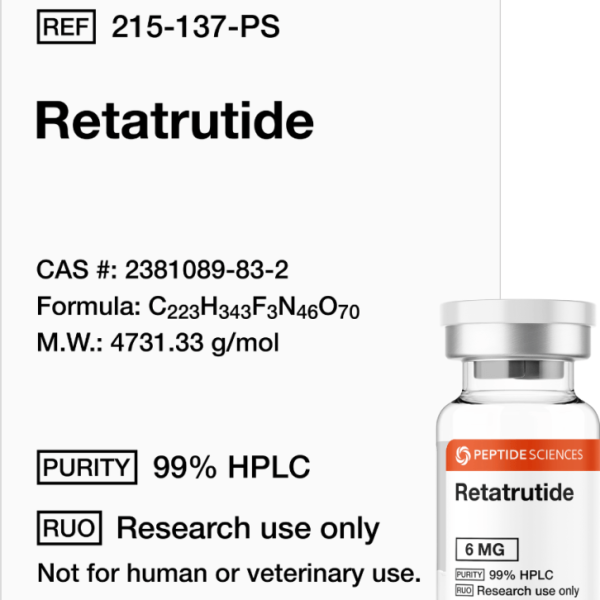
- Purity: 99% or greater
- Testing: HPLC and Mass Spectrometry
- Intended use: Laboratory and in-vitro research only
Retatrutide Peptide Science and Triple-Receptor Research
A defining feature of retatrutide peptide science is the compound’s ability to provide a single molecular platform for studying three metabolic receptor systems simultaneously.
GIP Receptor Research
The GIP-associated component allows researchers to investigate glucose-dependent insulinotropic signaling and interactions between GIPR activation and broader metabolic pathways.
GLP-1 Receptor Research
The GLP-1 component makes retatrutide peptide science relevant to laboratory investigations involving beta-cell signaling, glucagon regulation, gastrointestinal signaling, and central metabolic pathways.
Glucagon Receptor Research
The GCGR component adds an additional pathway for examining hepatic signaling, energy expenditure, lipid metabolism, and thermogenic responses in experimental models.
The combined architecture distinguishes Retatrutide from compounds designed primarily around one or two incretin-associated receptors.
Retatrutide Peptide Science Quality Standards & Analytical Testing
At USA PEPTIDE SCIENCES, maintaining absolute data integrity is the foundational pillar of our manufacturing protocols. The Retatrutide 12mg formulation is produced under rigid quality control standards to eliminate compounding variables.
We utilize High-Performance Liquid Chromatography (HPLC) to verify an absolute chemical purity profile of 99% or greater. Additionally, Mass Spectrometry (MS) is conducted to verify amino-acid sequence identity and confirm structural characteristics associated with the C20 lipophilic side chain.
Every order is shipped with a comprehensive, batch-specific Certificate of Analysis (COA) to support experimental traceability and reproducibility.
For laboratories studying retatrutide peptide science, standardized analytical verification provides an important baseline for receptor-binding, metabolic, and longitudinal experimental models.
Retatrutide Peptide Science Storage and Handling Requirements
To safeguard the complex structural conformation and lipophilic side chain of Retatrutide 12mg, the vacuum-sealed, lyophilized powder must be stored long-term in a freezer environment at -20°C.
Prior to initiating laboratory assays, reconstitution must be carried out using an appropriate sterile or bacteriostatic research diluent. Once in a liquid state, the peptide is highly sensitive to thermal degradation and mechanical breakdown and should be maintained between 2°C and 8°C.
Dissolve the research material using gentle, slow rotation while avoiding aggressive mechanical agitation or shaking.
Related Retatrutide Peptide Science Research Compounds
Researchers investigating retatrutide peptide science or comparing triple-receptor agonism with related metabolic research pathways may also explore:
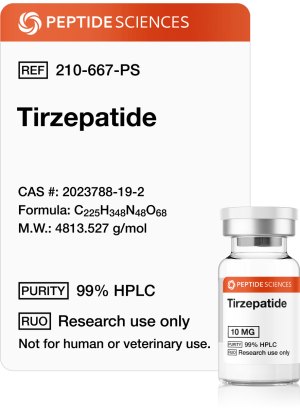
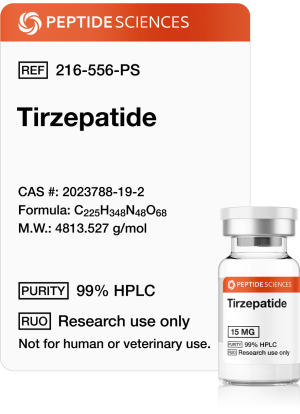
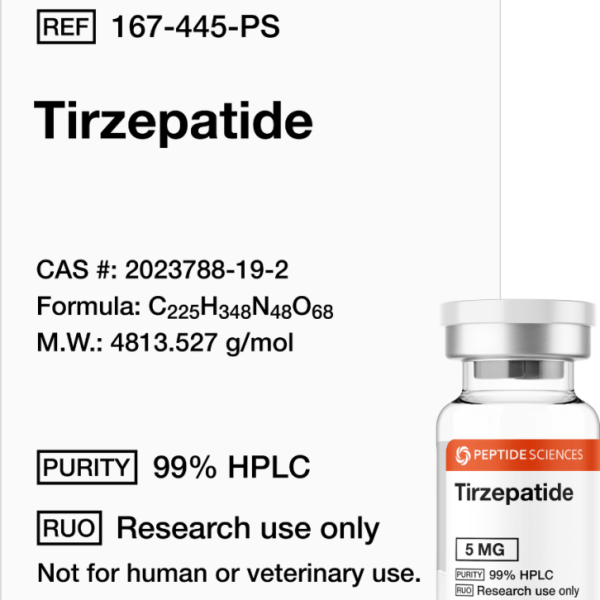
- Retatrutide peptide science comparison – Tirzepatide 15mg research peptide — related dual GIP and GLP-1 receptor research compound for comparative incretin studies.
- Retatrutide peptide science comparison – Semaglutide 3mg research peptide — GLP-1 receptor research peptide for comparative single-receptor pathway studies.
- Retatrutide peptide science comparison – Retatrutide 16mg research peptide — higher-quantity Retatrutide format for appropriately designed laboratory protocols.
Retatrutide Peptide Science FAQ
What is retatrutide peptide science?
Retatrutide peptide science refers to scientific investigation of Retatrutide, a synthetic 39-amino-acid research peptide designed to interact with the GIP, GLP-1, and glucagon receptor pathways.
What is Retatrutide?
Retatrutide is a synthetic multi-receptor peptide investigated as a single molecular agonist of the GIP receptor, GLP-1 receptor, and glucagon receptor.
Why is retatrutide peptide science called triple-receptor research?
Retatrutide peptide science involves three receptor systems simultaneously: GIPR, GLP-1R, and GCGR. This distinguishes the compound from single-receptor and dual-receptor research peptides.
What does peptide science retatrutide mean?
Peptide science retatrutide is a search variation associated with scientific and laboratory research involving Retatrutide and its multi-receptor signaling architecture.
What does peptide sciences retatrutide mean?
Peptide sciences retatrutide is commonly used as a search phrase when researchers are looking for Retatrutide research products or scientific information from peptide suppliers. The product described here is specifically supplied by USA Peptide Sciences.
Does Peptide Sciences sell Retatrutide?
The query “does peptide sciences sell retatrutide” may refer to a separate supplier using the Peptide Sciences name. This page describes Retatrutide 12mg supplied by USA Peptide Sciences and does not claim affiliation with another similarly named company.
What does peptide sciences retatrutide 12mg mean?
The search phrase peptide sciences retatrutide 12mg generally refers to researchers looking for a 12mg Retatrutide research format from peptide suppliers. USA Peptide Sciences supplies the compound described here as a 12mg lyophilized research vial.
What does retatrutide peptide peptide sciences mean?
Retatrutide peptide peptide sciences is an awkward search variation associated with laboratory Retatrutide products and peptide research suppliers. The scientifically preferred terminology on this page is Retatrutide or retatrutide peptide science.
What do peptide sciences retatrutide reviews show?
The phrase peptide sciences retatrutide reviews reflects users looking for reviews of Retatrutide suppliers. This page does not manufacture or reproduce unverified customer-review claims. Researchers should instead evaluate objective criteria such as compound identity, analytical purity, COA documentation, testing methods, storage requirements, and supplier transparency.
How many amino acids are in Retatrutide?
Retatrutide is described as a 39-amino-acid synthetic peptide.
What receptors are investigated in retatrutide peptide science?
Retatrutide peptide science focuses primarily on the GIP receptor, GLP-1 receptor, and glucagon receptor and the downstream signaling associated with their simultaneous activation.
How does Retatrutide differ from Tirzepatide?
Retatrutide is investigated as a triple GIP/GLP-1/glucagon receptor agonist, whereas Tirzepatide 15mg research peptide is primarily studied as a dual GIP and GLP-1 receptor agonist.
How does Retatrutide differ from Semaglutide?
Retatrutide is designed for investigation across three receptor pathways, while Semaglutide 3mg research peptide is primarily studied through GLP-1 receptor signaling.
Is Retatrutide available in other research quantities?
Yes. Researchers comparing quantities can also review Retatrutide 16mg research peptide for appropriately designed laboratory studies.
What purity is Retatrutide 12mg?
The supplied specifications state that the retatrutide peptide science product has a chemical purity profile of 99% or greater, with HPLC and Mass Spectrometry used for analytical verification.
Does Retatrutide 12mg include a Certificate of Analysis?
Yes. According to the supplied specifications, every Retatrutide 12mg order includes a batch-specific Certificate of Analysis to support laboratory traceability and reproducibility.
How should Retatrutide 12mg be stored?
According to the supplied product information, Retatrutide should be stored at -20°C while lyophilized. Following controlled laboratory reconstitution, the material should be maintained between 2°C and 8°C.
Can researchers find retatrutide peptide science studies on PubMed?
Yes. Researchers can review retatrutide peptide science literature on PubMed for publications involving Retatrutide, GIPR, GLP-1R, GCGR, multi-receptor agonism, metabolic signaling, and related experimental pathways.
Is retatrutide peptide science intended for human use?
No. Retatrutide peptide science material supplied by USA Peptide Sciences is designated strictly for laboratory and in-vitro research. It is not intended for human or veterinary consumption, weight-management use, therapeutic administration, diagnostics, or other clinical applications.
Retatrutide Peptide Science 12mg Research Use Disclaimer
The compounds distributed by USA PEPTIDE SCIENCES, including Retatrutide 12mg, are designated strictly for laboratory research purposes only.
Under no circumstances are these products approved or intended for human or veterinary consumption, diagnostic protocols, weight-management treatment, or therapeutic drug administration.
All handling, measuring, and experimental evaluation must be conducted exclusively by qualified scientific professionals within an appropriate controlled research facility.
Silas –
Joshua –
Ordering was smooth and the support team provided clear handling guidance for the 12mg research vial. The Phase 2 data shows the 12mg dose yields a 24.2% total body weight reduction at 48 weeks, with 63% of participants achieving ≥20% weight loss . I noticed significant appetite suppression within the first few weeks. The 12mg vial provided enough for a meaningful research cycle. A quality product from a reliable vendor.
Jazmyne –
First time using a triple-agonist at this dose and I’m impressed with the results. Support walked me through reconstitution and handling. Phase 3 data shows the 12mg dose achieved up to 28.7% weight loss at 68 weeks in the TRIUMPH-4 trial . The fat mass reduction of 23.2% and hepatic fat reduction of 82.4% reported in the literature align with my observations . The peptide has performed consistently in my protocols.
Myron –
I’ve researched several incretin mimetics and this retatrutide stands out for its unique triple-agonist mechanism. The team answered my questions about the Phase 3 data, confirming the 12mg dose shows significant metabolic improvements including an 8.79 mmHg reduction in systolic blood pressure . Shipping was fast with secure packaging. The peptide has performed consistently in my research protocols. Will definitely reorder.
Arnoldo –
I’ve been following the GLP-1 polyagonist literature and this retatrutide formulation performed exceptionally well in my research. The support team confirmed this is the maximal weekly dose studied in Phase 2 trials, demonstrating consistent efficacy across metabolic markers . Shipping was prompt with a COA showing excellent purity. I observed the expected effects on appetite regulation and weight management, with the triple-agonist mechanism providing a more comprehensive research model than single or dual agonists.