
Pal-GHK 200mg (Palmitoyl Tripeptide-1) (Topical)
$210.00
Pal-GHK 200mg – Palmitoyl Tripeptide-1 Topical Research Peptide
Pal-GHK 200mg Topical Overview
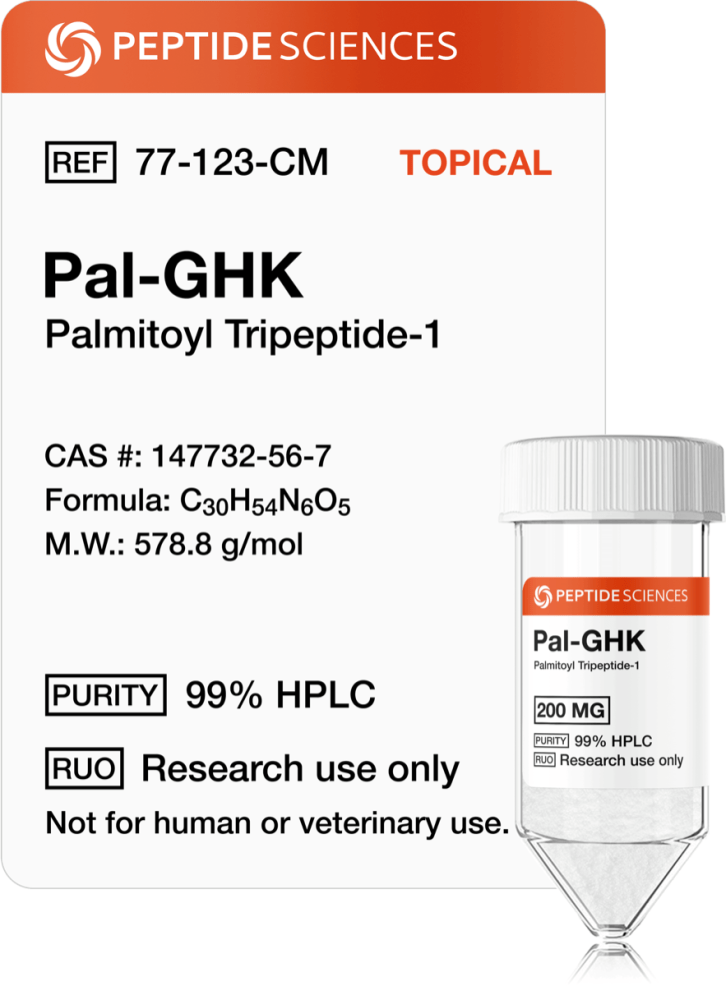
Pal-GHK 200mg (Palmitoyl Tripeptide-1) from USA PEPTIDE SCIENCES is the synthetic palmitoylated form of the glycyl-L-histidyl-L-lysine tripeptide, supplied as a topical research material for controlled in-vitro fibroblast, extracellular-matrix, and collagen-pathway studies.
The addition of a C16 palmitoyl chain alters the physicochemical profile of the parent GHK sequence, increasing its lipophilic character relative to unconjugated GHK. This structural modification makes pal-ghk particularly relevant to laboratories investigating lipid-associated delivery, model-membrane interaction, fibroblast signaling, and topical peptide formulation systems.
For researchers studying pal-ghk, the 200mg format provides a high-purity research material suitable for controlled dermatological, fibroblast, extracellular-matrix, and peptide-formulation studies.
Pal-GHK Compound Class and Research Mechanism
Pal-GHK is the palmitoyl-conjugated form of the naturally occurring Gly-His-Lys tripeptide. The parent GHK peptide has been identified in human plasma and has been extensively investigated in extracellular-matrix and tissue-remodeling research.
The N-terminal palmitoylation gives pal-ghk a more lipophilic molecular profile without incorporating copper into the supplied structure, distinguishing Palmitoyl Tripeptide-1 from the copper-coordinated GHK-Cu complex.
This distinction allows researchers to compare:
- Free GHK signaling
- Palmitoylated GHK behavior
- GHK-Cu copper-associated signaling
- Fibroblast responses
- Extracellular-matrix pathways
- Collagen-associated expression
- Lipid-membrane interactions
- Topical delivery and permeation models
Researchers investigating pal-ghk and its parent GHK sequence can review Palmitoyl Tripeptide-1, GHK, fibroblast, and collagen research on PubMed for relevant scientific literature.
Pal GHK Peptide and Palmitoylation Research
The pal ghk peptide consists of the GHK tripeptide sequence — Gly-His-Lys — modified with a palmitoyl fatty-acid group.
Palmitoylation is commonly investigated as a strategy for changing peptide hydrophobicity and interactions with lipid-rich experimental environments. In the case of pal-ghk, the modification creates a research compound with properties distinct from both free GHK and copper-bound GHK-Cu.
Laboratories may therefore use pal-ghk to examine how lipid conjugation affects:
- Peptide partitioning
- Membrane association
- Experimental permeation
- Peptide stability
- Fibroblast-associated responses
- Extracellular-matrix signaling
- Collagen-related pathways
- Formulation compatibility
Pal-GHK Research Specifications
| Property | Specification |
|---|---|
| Compound | Pal-GHK / Palmitoyl Tripeptide-1 |
| Sequence | Palmitoyl-Gly-His-Lys-OH |
| Parent sequence | Gly-His-Lys |
| Amino-acid count | 3 |
| Molecular formula | C30H54N6O5 |
| Molecular weight | Approximately 578.8 g/mol |
| CAS number | 147732-56-7 |
| Research class | Palmitoylated GHK tripeptide |
| Supplied form | Topical research material |
| Strength | 200mg |
| Purity | >99% according to supplied HPLC specification |
| Analytical testing | HPLC and Mass Spectrometry |
| Storage | 2°C to 8°C; protect from light |
| Intended use | Laboratory and in-vitro research only |
Pal-GHK and Fibroblast Research
A major area of interest surrounding pal-ghk is the study of peptide signaling within dermal fibroblast and extracellular-matrix models.
The parent GHK system has a substantial research history involving fibroblast activity, collagen-associated signaling, extracellular-matrix synthesis, and tissue-remodeling pathways. Palmitoylation provides researchers with a chemically modified version of this sequence for studying how lipid conjugation may alter experimental behavior.
Published work has also investigated Palmitoyl Tripeptide-1 directly in human skin fibroblast collagen-metabolism models, supporting continued interest in this peptide within controlled dermal research.
The pal ghk peptide should nevertheless be distinguished from GHK-Cu because copper coordination can substantially alter the biological and molecular behavior of the underlying GHK sequence.
Pal-GHK vs GHK-Cu
Although pal-ghk and GHK-Cu share the Gly-His-Lys tripeptide sequence, they are chemically different research materials.
Pal-GHK:
- Contains the GHK sequence
- Incorporates a palmitoyl fatty-acid group
- Does not contain coordinated copper as part of the Palmitoyl Tripeptide-1 structure
- Is particularly relevant to lipid-associated and topical formulation research
GHK-Cu:
- Contains GHK coordinated with Cu²⁺
- Is widely studied in fibroblast and extracellular-matrix models
- Provides a copper-dependent signaling platform
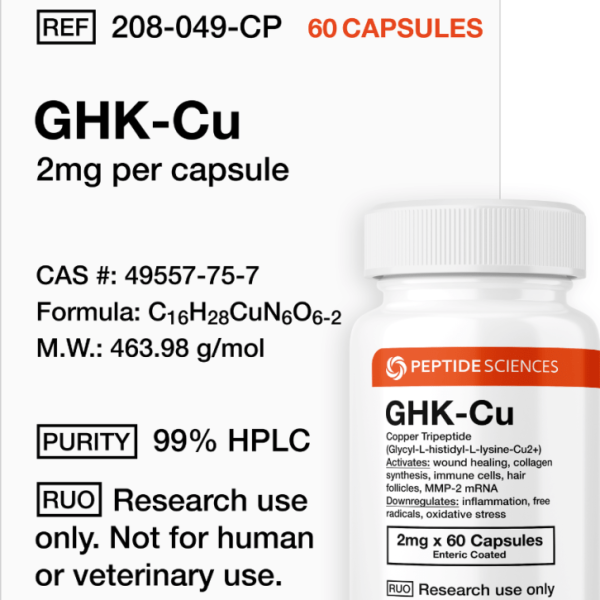
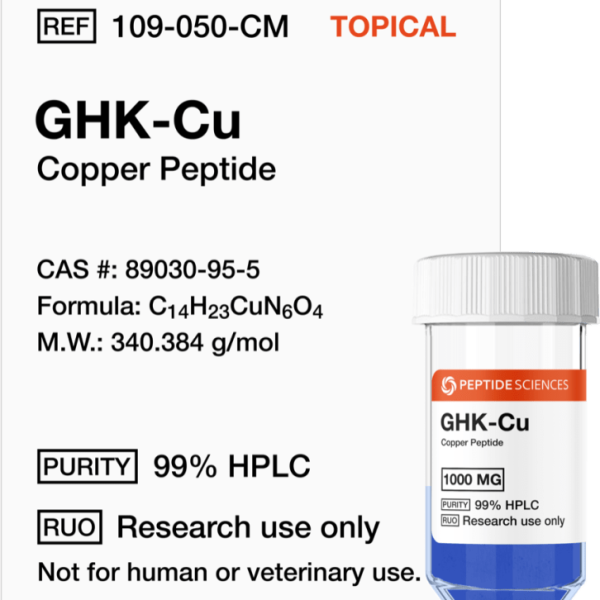
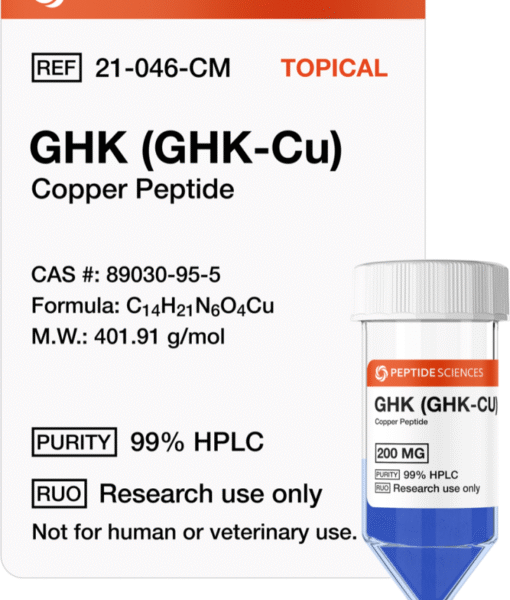
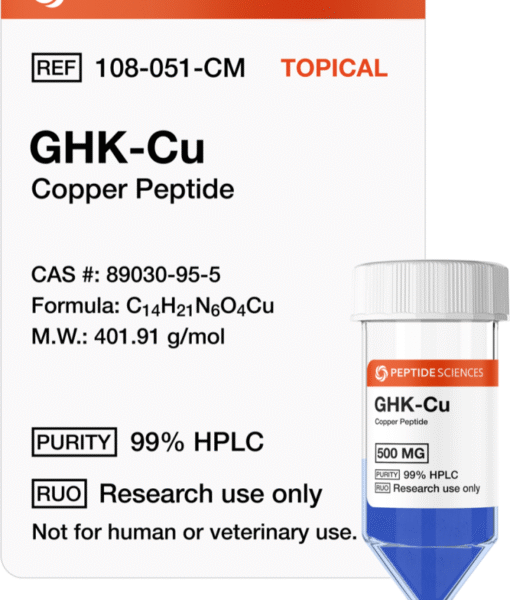
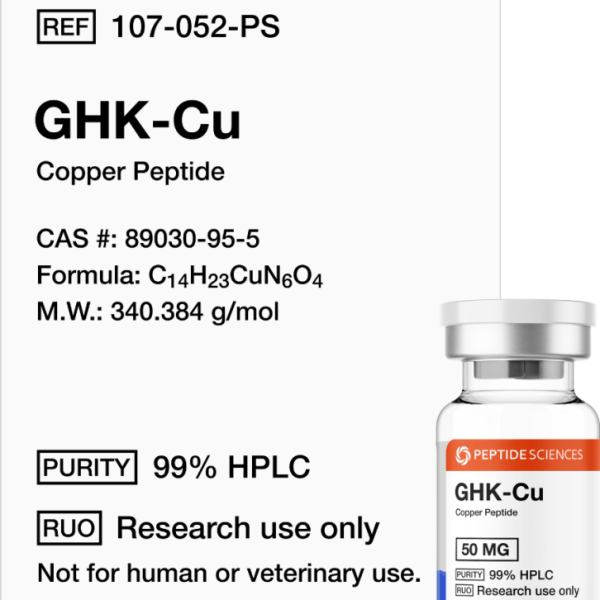
Researchers can compare pal-ghk with GHK-Cu 50mg copper peptide to investigate how palmitoylation and copper coordination alter the behavior of the same underlying GHK sequence.
Pal-GHK Quality Standards & Analytical Testing
Laboratory reagent identity and consistency are central to research reproducibility at USA PEPTIDE SCIENCES.
Each batch of Pal-GHK 200mg is supplied according to the stated purity specification of greater than 99%, with High-Performance Liquid Chromatography used for purity analysis and Mass Spectrometry used for identity confirmation.
Analytical testing supports verification of the pal-ghk molecular identity and reduces variability arising from unwanted synthesis-related impurities.
Certificate of Analysis documentation accompanies the supplied research material according to the product specifications.
For laboratories conducting concentration-dependent pal-ghk experiments, consistent analytical characterization is particularly important when comparing results between formulation, fibroblast, or membrane-model studies.
Pal-GHK Storage and Laboratory Handling
According to the supplied specifications, pal-ghk research material should be stored between 2°C and 8°C and protected from direct light.
The topical research material is intended for controlled in-vitro, formulation, and appropriate preclinical research rather than use as a finished consumer cosmetic.
The working concentration used in a particular experimental protocol should be determined by the principal investigator according to the objectives and design of the laboratory study.
Where laboratory preparation creates aliquots for repeated experiments, researchers should use handling procedures appropriate to peptide stability and minimize unnecessary environmental exposure.
Related Pal-GHK Topical Research Peptides
Researchers studying pal-ghk, lipid-conjugated peptides, fibroblast signaling, or extracellular-matrix pathways may also explore:
- Pal-GHK comparison – GHK-Cu 50mg Copper Peptide — the copper-coordinated GHK research complex for comparative copper-dependent and extracellular-matrix studies.
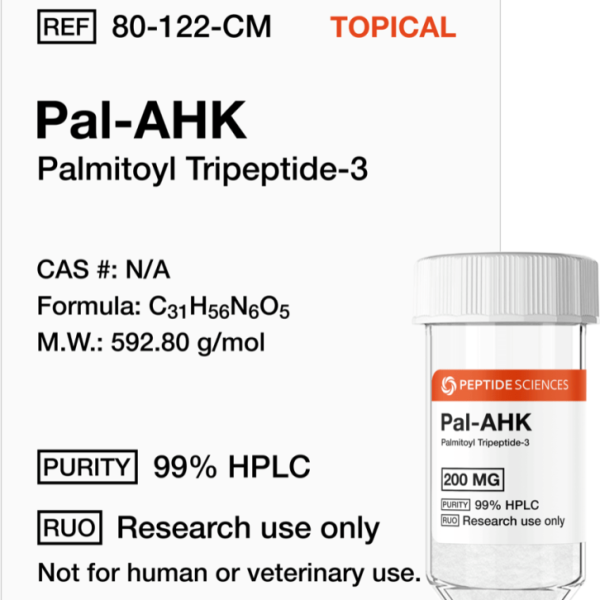
- Pal-GHK comparison – Pal-AHK 200mg Topical — related palmitoylated peptide material for comparative lipid-conjugation and topical formulation research.
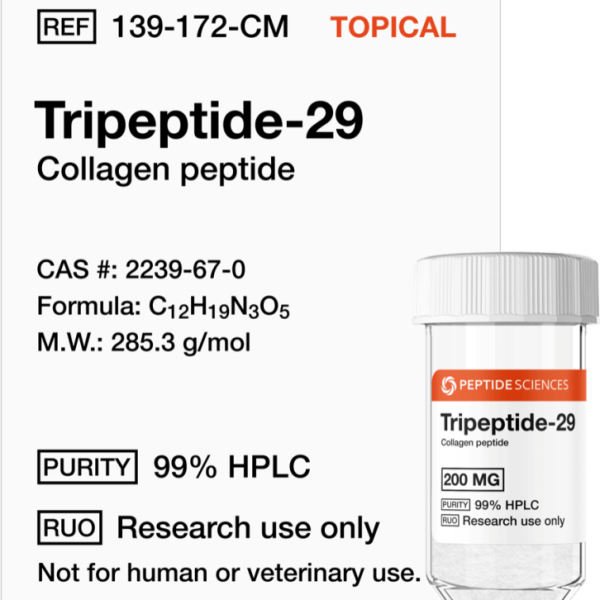
- Pal-GHK comparison – Tripeptide-29 200mg Collagen Peptide — related tripeptide research material for comparative fibroblast, collagen, and extracellular-matrix investigations.
Pal-GHK FAQ
What is pal-ghk?
Pal-ghk is Palmitoyl Tripeptide-1, a lipid-modified peptide consisting of the Gly-His-Lys tripeptide linked to a palmitoyl fatty-acid group.
It is used as a laboratory research material for studies involving fibroblasts, extracellular-matrix pathways, peptide formulation, and model-membrane interactions.
What is pal ghk peptide?
Pal ghk peptide is another way of referring to Palmitoyl Tripeptide-1. Its peptide sequence is Gly-His-Lys, with an N-terminal palmitoyl group.
What is the sequence of pal-ghk?
The sequence is commonly represented as:
Palmitoyl-Gly-His-Lys-OH
The peptide portion contains three amino acids: glycine, histidine, and lysine.
What is the molecular weight of pal-ghk?
The molecular weight of Palmitoyl Tripeptide-1 is approximately 578.8 g/mol.
What is the molecular formula of Palmitoyl Tripeptide-1?
The molecular formula is C30H54N6O5.
What is the CAS number for pal-ghk?
Palmitoyl Tripeptide-1 is associated with CAS number 147732-56-7.
Is pal-ghk the same as GHK-Cu?
No. Pal-ghk contains a palmitoyl group attached to GHK, whereas GHK-Cu contains the GHK tripeptide coordinated with copper.
Researchers can compare Pal-GHK with GHK-Cu copper peptide in controlled studies.
Does pal-ghk contain copper?
Palmitoyl Tripeptide-1 itself is not defined as the copper-coordinated GHK-Cu complex. Although both contain the GHK sequence, pal-ghk and GHK-Cu are distinct research compounds.
Why is GHK palmitoylated?
Palmitoylation increases the lipid-associated character of a peptide. Researchers may investigate pal-ghk to understand how this modification changes membrane interaction, formulation behavior, stability, and biological responses compared with unmodified GHK.
What is pal-ghk studied for?
Pal-ghk is relevant to research involving:
- Fibroblast signaling
- Extracellular-matrix pathways
- Collagen-associated biology
- Lipid-conjugated peptide behavior
- Model-membrane interaction
- Topical formulation development
- Peptide stability
- Dermal-cell research
These are scientific research areas and not claims of cosmetic or therapeutic benefit.
Is pal-ghk studied for collagen pathways?
Yes. Palmitoyl Tripeptide-1 has been investigated in fibroblast and collagen-metabolism research models.
The broader GHK research literature also includes extracellular-matrix and collagen-associated pathways, although results from GHK-Cu should not automatically be attributed to pal-ghk because they are chemically distinct compounds.
Is pal-ghk a topical cosmetic product?
No. The USA Peptide Sciences pal-ghk 200mg material is supplied strictly as a laboratory research product. It is not supplied as a finished serum, cream, cosmetic treatment, or consumer skincare product.
What purity is pal-ghk 200mg?
The supplied specification states a purity of greater than 99%, analyzed using HPLC, with Mass Spectrometry used for identity verification.
How should pal-ghk be stored?
According to the supplied product specifications, pal-ghk should be stored between 2°C and 8°C and protected from light.
What related peptides can researchers compare with pal-ghk?
Researchers may compare pal-ghk with GHK-Cu 50mg, Pal-AHK 200mg Topical, and Tripeptide-29 200mg Collagen Peptide in appropriately designed laboratory studies.
Can researchers find pal-ghk studies on PubMed?
Researchers can review pal-ghk and Palmitoyl Tripeptide-1 research on PubMed for literature involving Palmitoyl Tripeptide-1, GHK, fibroblasts, collagen metabolism, extracellular-matrix signaling, and related peptide systems.
Is pal-ghk intended for human use?
No. Pal-ghk supplied by USA Peptide Sciences is designated strictly for laboratory and in-vitro research.
It is not intended for human or veterinary consumption, personal topical application, finished cosmetic use, therapeutic administration, clinical diagnostics, or treatment of any disease or condition.
Pal-GHK 200mg Research Use Disclaimer
The Pal-GHK 200mg (Palmitoyl Tripeptide-1) material supplied by USA PEPTIDE SCIENCES is intended strictly for laboratory research and development purposes only.
It is not intended for human or veterinary consumption, personal topical use, incorporation into finished consumer cosmetics, diagnostic procedures, or therapeutic administration.
All handling and experimentation must be performed by qualified scientific professionals within an appropriate controlled research environment.
Brody –
This was my first time using a topical peptide and I could not be happier with the experience. The customer support team walked me through the mixing process and explained how GHK works to stimulate fibroblast activity and support the extracellular matrix . Shipping was lightning fast and the packaging was professional with clear handling instructions. In terms of results, I noticed improvements in my skin smoothness and firmness within a few weeks of consistent use. My complexion looks more even and my makeup applies much more smoothly without settling into fine lines. The 200mg size is generous and will last for months of daily use . This is a great product from a trustworthy vendor.