
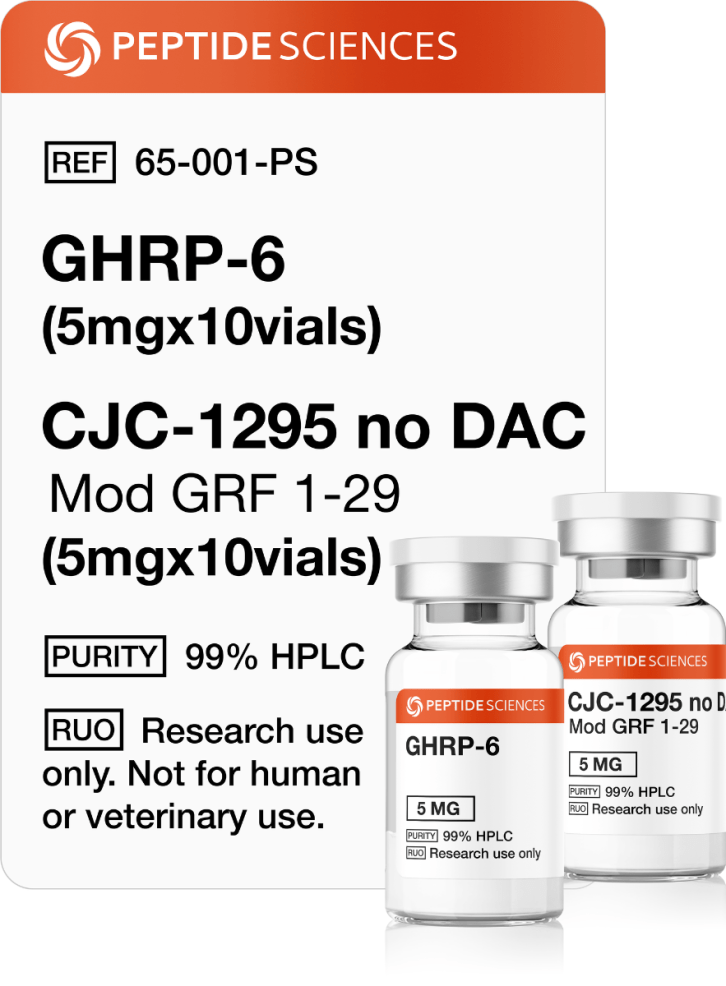
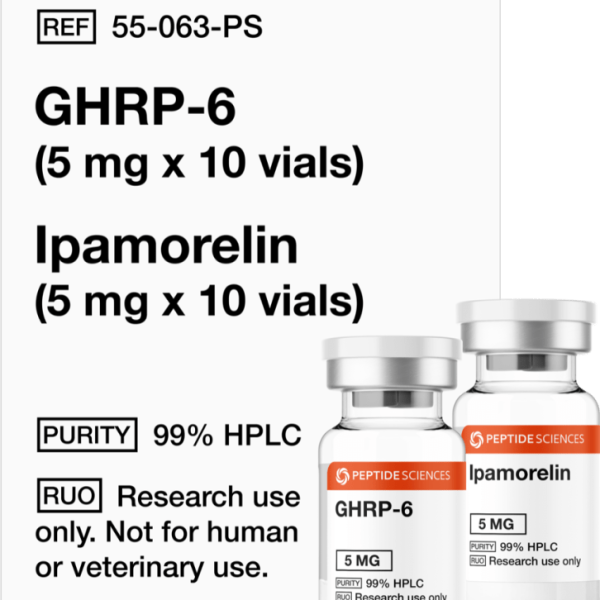
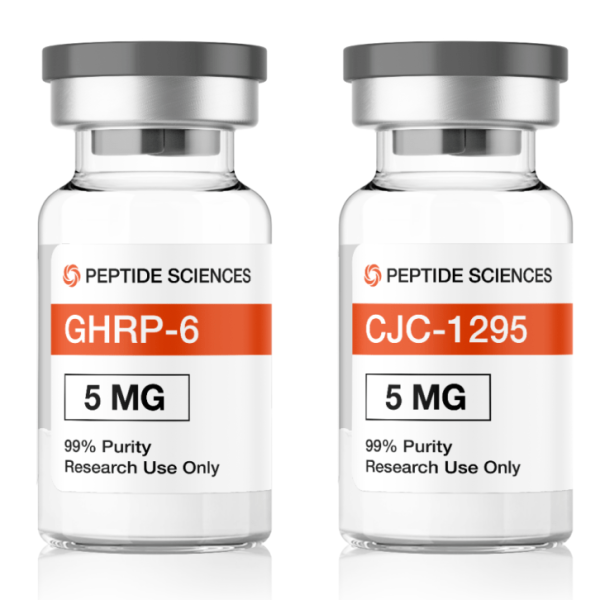
ghrp-6 cjc-1295 (5mg x 10), no DAC (5mg x 10)
$726.75
PRODUCT SHORT DESCRIPTION
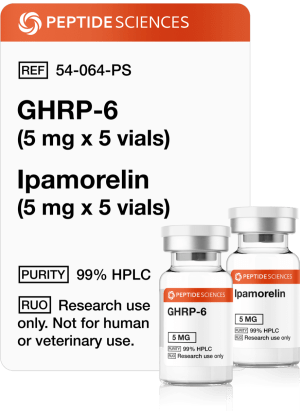
The GHRP-6 and CJC-1295 No DAC combination platform delivers a high-resolution, multi-vial research kit containing ten 5mg vials of GHRP-6 alongside ten 5mg vials of CJC-1295 No DAC. This 5000mcg per vial configuration is engineered strictly for investigating dual-receptor somatotroph coordination, amplified growth hormone (GH) pulsatility, and downstream endocrine signaling kinetics.
ghrp-6 cjc-1295 5mg x 10 – Dual-Receptor Research Peptide Kit
WooCommerce Short Product Description
- ghrp-6 cjc-1295 dual-peptide laboratory research kit
- GHRP-6: 5mg x 10 vials = 50mg
- CJC-1295 No DAC: 5mg x 10 vials = 50mg
- Total kit: 20 individual vials / 100mg total research material
- GHRP-6 class: Synthetic hexapeptide growth hormone secretagogue
- GHRP-6 sequence: His-D-Trp-Ala-Trp-D-Phe-Lys-NH₂
- CJC-1295 No DAC class: Modified GRF (1-29) GHRH analogue
- Primary research systems: GHS-R1a and GHRH receptor signaling
- Purity: ≥99% according to supplied specifications
- Analytical testing: HPLC and Mass Spectrometry
- Form: Lyophilized research peptides
- Strictly for laboratory and in-vitro research only
Introduction to the Somatotropic Dual-Receptor Matrix
The GHRP-6 5mg x 10 and CJC-1295 No DAC 5mg x 10 research kit represents a dual-mechanism secretagogue platform designed for controlled investigation of signaling along the mammalian somatotropic axis.
Rather than relying on a single receptor pathway, this ghrp-6 cjc-1295 research configuration combines two distinct peptide classes.
GHRP-6 is a synthetic growth hormone secretagogue acting through GHS-R1a-associated signaling, while CJC-1295 No DAC—more precisely described as Modified GRF (1-29)—provides a modified GHRH-receptor agonist.
At USA PEPTIDE SCIENCES, the ghrp-6 cjc-1295 configuration is supplied as 20 separate lyophilized research vials:
- 10 x 5mg GHRP-6 vials
- 10 x 5mg CJC-1295 No DAC vials
- 50mg total GHRP-6
- 50mg total CJC-1295 No DAC
- 100mg total research material
This separate-vial format allows qualified laboratories to evaluate individual compounds as controls or examine both signaling systems within appropriately designed comparative experiments.
ghrp-6 cjc-1295 Research Overview
The primary scientific value of ghrp-6 cjc-1295 research lies in the interaction between two receptor systems involved in growth-hormone-associated signaling.
GHRH receptors and growth hormone secretagogue receptors operate through distinct but interacting cellular mechanisms.
Published research involving GHRP-6 and GHRH has demonstrated synergistic GH release under specific experimental conditions, including responses exceeding the arithmetic sum produced by each compound independently.
Relevant areas of investigation include:
- GHRH receptor signaling
- GHS-R1a-associated signaling
- Pituitary somatotroph responses
- Receptor cross-talk
- cAMP-associated pathways
- Calcium-dependent signaling
- Secretory vesicle exocytosis
- Hypothalamic-pituitary regulation
- Somatostatin-associated feedback
- GH/IGF-1-axis signaling
- Secretagogue response kinetics
Researchers can review GHRP-6, GHRH and growth hormone secretagogue research on PubMed for peer-reviewed literature relevant to these pathways.
GHRP-6 Research Profile
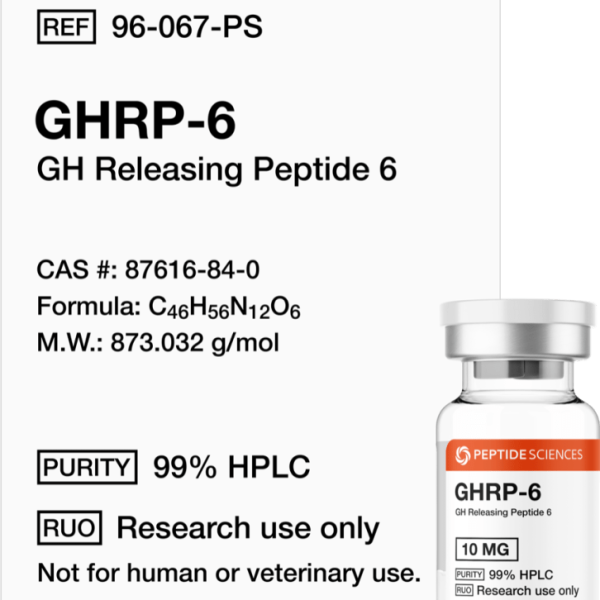
Growth Hormone-Releasing Peptide-6, commonly abbreviated GHRP-6, is a synthetic hexapeptide represented by the sequence:
His-D-Trp-Ala-Trp-D-Phe-Lys-NH₂
GHRP-6 belongs to the growth hormone secretagogue family and interacts with the growth hormone secretagogue receptor system.
GHRP-6 Research Specifications
- Compound: GHRP-6
- Peptide class: Synthetic hexapeptide
- Sequence: His-D-Trp-Ala-Trp-D-Phe-Lys-NH₂
- Primary receptor system: GHS-R1a-associated signaling
- Quantity per vial: 5mg
- Number of vials: 10
- Total supplied quantity: 50mg
- Form: Lyophilized research peptide
- Intended use: Laboratory research only
Within the ghrp-6 cjc-1295 research kit, GHRP-6 provides the GHS-receptor-associated arm of the experimental matrix.
GHRP-6 and GHS-R1a Signaling
Growth hormone-releasing peptides act through a receptor system distinct from the classical GHRH receptor.
The growth hormone secretagogue receptor, particularly GHS-R1a, is a G-protein-coupled receptor involved in ghrelin and synthetic secretagogue signaling.
Laboratories may investigate GHRP-6-associated:
- GHS-R1a activation
- Intracellular calcium signaling
- Gq-associated pathways
- Pituitary secretory responses
- Hypothalamic signaling
- Receptor regulation
- Secretagogue pharmacology
GHRP-6 is a synthetic agonist of this signaling system; it should not be described as chemically identical to endogenous ghrelin.
CJC-1295 No DAC / Modified GRF 1-29
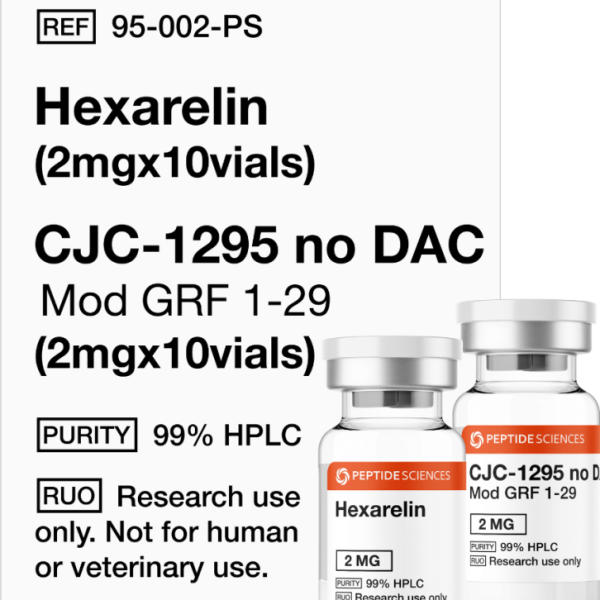
The second component of the ghrp-6 cjc-1295 kit is commercially designated CJC-1295 No DAC.
The more precise structural description is Modified GRF (1-29) or tetrasubstituted GRF (1-29).
It is a synthetic 29-amino-acid GHRH analogue containing four substitutions relative to native GHRH (1-29), designed to improve resistance to rapid enzymatic degradation.
Common Research Names
The material may be encountered as:
- Modified GRF (1-29)
- Mod GRF 1-29
- Tetrasubstituted GRF (1-29)
- CJC-1295 No DAC
- CJC-1295 without DAC
The marketplace term CJC-1295 No DAC should not be confused with original DAC-bearing CJC-1295.
CJC-1295 No DAC Research Profile
- Compound designation: Modified GRF (1-29)
- Common supplier name: CJC-1295 No DAC
- Peptide length: 29 amino-acid residues
- Research class: Modified GHRH analogue
- Primary receptor: GHRH receptor
- Quantity per vial: 5mg
- Number of vials: 10
- Total supplied quantity: 50mg
- Form: Lyophilized research peptide
- Intended use: Laboratory research only
Within the ghrp-6 cjc-1295 kit, Modified GRF (1-29) provides the GHRH-receptor-associated component.
ghrp-6 cjc-1295 Dual-Receptor Signaling
The scientific rationale for combining these compounds comes from their different receptor systems.
Modified GRF / GHRH-Receptor Signaling
GHRH-receptor activation is associated with:
- Adenylyl cyclase activation
- cAMP production
- Protein-kinase-associated pathways
- Pituitary somatotroph signaling
- GH-associated secretory responses
GHRP-6 / GHS-R Signaling
GHS-R1a-associated activation involves signaling mechanisms that can include:
- Gq-associated signaling
- Phospholipase C pathways
- Inositol phosphate signaling
- Intracellular calcium mobilization
- Secretagogue-associated exocytosis
The convergence of these pathways makes ghrp-6 cjc-1295 useful for studying receptor-level interaction within controlled endocrine research models.
GHRP-6 and GHRH Synergy Research
Several classic studies have examined the combination of GHRP-6 and GHRH.
Experimental findings include:
- Synergistic GH-associated responses in normal human subjects
- Responses greater than those produced by either peptide alone
- Responses exceeding the arithmetic sum under certain conditions
- Synergistic GH release in cultured pituitary cells
- Potentiation of GHRH-associated cAMP accumulation
These findings provide a sound scientific rationale for investigating a ghrp-6 cjc-1295 research configuration.
However, the exact USA Peptide Sciences kit should not be described as guaranteeing a particular magnitude of synergy.
Experimental response depends on variables such as:
- Biological model
- Compound concentration
- Exposure time
- Receptor expression
- Prior stimulation
- Cellular state
- Hypothalamic input
- Assay methodology
GHRP-6 and Somatostatin Research
The relationship between GHRP-6 and somatostatin requires careful wording.
Somatostatin is a major inhibitory regulator of growth hormone secretion, and somatostatinergic tone can influence responses to secretagogues.
However, experimental evidence does not support reducing the GHRP-6 mechanism to simple suppression of hypothalamic somatostatin.
Published studies have specifically concluded that GHRP-6-induced GH release probably does not depend primarily on decreased hypothalamic somatostatin secretion.
Researchers using the ghrp-6 cjc-1295 kit may instead investigate interactions among:
- Somatostatinergic tone
- GHRH signaling
- GHS-R signaling
- Pituitary responsiveness
- Neuroendocrine feedback
- Secretagogue response magnitude
GHRP-6 and Hypothalamic Signaling Research
Experimental studies suggest that GHRP-6 activity can involve both pituitary and hypothalamic components.
Research in subjects with hypothalamic-pituitary disconnection demonstrated substantially altered GHRP-6 responses and loss of the normal GHRP-6/GHRH synergistic effect.
This makes ghrp-6 cjc-1295 relevant to experiments examining:
- Hypothalamic-pituitary communication
- GHS signaling
- GHRH interaction
- Neuroendocrine feedback
- Receptor cooperation
The precise mechanism underlying GHRP-6/GHRH synergism remains more complex than a single inhibitory or stimulatory pathway.
GHRP-6 and Orexigenic Signaling Research
GHS-R1a is also involved in signaling pathways associated with ghrelin, energy balance and feeding-related neurobiology.
GHRP-6 may therefore be investigated in experimental models involving:
- Hypothalamic GHS-R signaling
- Feeding-associated neuronal pathways
- Energy-balance pathways
- Ghrelin-receptor pharmacology
- Neuroendocrine-metabolic cross-talk
These research areas do not establish appetite, weight-change or metabolic benefits for human use.
ghrp-6 cjc-1295 and IGF-1 Axis Research
Growth-hormone-associated signaling is linked to downstream hepatic and peripheral IGF-1 pathways.
Researchers may therefore examine ghrp-6 cjc-1295 alongside laboratory endpoints involving:
- GH-associated signaling
- IGF-1 transcription
- Hepatic signaling
- Somatotropic-axis feedback
- Endocrine gene-expression responses
The kit is not represented as producing a specific IGF-1 increase in humans.
Advantages of the 20-Vial Separate-Peptide Kit
The USA Peptide Sciences kit contains 20 separate vials, rather than a single premixed formulation.
This provides laboratories with:
- 10 individual GHRP-6 vials
- 10 individual CJC-1295 No DAC vials
- 5mg material per vial
- 50mg of each peptide
- 100mg total research material
- Independent single-compound control options
- Flexible comparative assay design
- Separate inventory tracking
- Reduced repeated handling of one large container
Although ghrp-6 cjc-1295 is used throughout this page as the primary search term for the combined kit, the compounds remain physically separated until incorporated into a laboratory protocol.
ghrp-6 cjc-1295 Research Specifications
| Property | Specification |
|---|---|
| Product | GHRP-6 + CJC-1295 No DAC Research Kit |
| GHRP-6 quantity | 5mg x 10 vials |
| Total GHRP-6 | 50mg |
| CJC-1295 No DAC quantity | 5mg x 10 vials |
| Total CJC-1295 No DAC | 50mg |
| Total kit quantity | 100mg |
| Total vial count | 20 |
| GHRP-6 class | Synthetic hexapeptide growth hormone secretagogue |
| GHRP-6 sequence | His-D-Trp-Ala-Trp-D-Phe-Lys-NH₂ |
| CJC component | Modified GRF (1-29) |
| CJC research class | Modified GHRH analogue |
| Primary receptor systems | GHS-R1a and GHRH receptor |
| Form | Lyophilized research peptides |
| Purity | ≥99% according to supplied specifications |
| Analytical testing | HPLC and Mass Spectrometry |
| Documentation | Batch-specific Certificate of Analysis |
| Intended use | Laboratory and in-vitro research only |
CJC-1295 No DAC vs CJC-1295 With DAC
The two names are often confused.
CJC-1295 No DAC / Modified GRF 1-29
This material:
- Lacks the albumin-binding DAC structure
- Is a modified 29-residue GHRH analogue
- Has different pharmacokinetic characteristics from DAC-bearing CJC-1295
Original CJC-1295 With DAC
The original molecule:
- Incorporates a Drug Affinity Complex
- Was designed for albumin binding
- Has substantially prolonged persistence compared with the non-DAC peptide backbone
For ghrp-6 cjc-1295 research, the kit specifically contains the No DAC / Modified GRF (1-29) configuration.
It is better to describe this difference structurally and pharmacokinetically rather than claim that No DAC perfectly recreates natural endocrine pulsatility or eliminates receptor fatigue.
Quality Standards & Analytical Testing
At USA PEPTIDE SCIENCES, compound identity and laboratory reproducibility are central to research-material quality.
According to the supplied specifications, each peptide included in the ghrp-6 cjc-1295 research kit has a stated purity of 99% or greater.
High-Performance Liquid Chromatography (HPLC) is used to support purity assessment, while Mass Spectrometry (MS) supports molecular identity verification.
A batch-specific Certificate of Analysis accompanies the research kit according to the supplied product information.
Researchers should use the corresponding batch documentation to evaluate:
- Peptide identity
- Purity
- Lot consistency
- Analytical characteristics
- Experimental reproducibility
Claims of complete absence of every possible synthesis residue, contaminant or truncated fragment should only be made when those specific analyses are documented on the corresponding COA.
Storage and Handling Requirements
According to the supplied specifications, all lyophilized vials in the ghrp-6 cjc-1295 research kit should be maintained at -20°C for long-term laboratory storage.
Prior to controlled research assays, preparation may be performed using an appropriate sterile, non-pyrogenic or bacteriostatic research diluent compatible with the experimental protocol.
Following laboratory reconstitution, the supplied storage specification calls for refrigeration between 2°C and 8°C.
Researchers should use gentle swirling during dissolution and avoid unnecessary aggressive shaking or mechanical agitation.
These instructions apply exclusively to laboratory material preparation and are not human dosing or administration guidance.
Related ghrp-6 cjc-1295 Research Compounds
Researchers studying ghrp-6 cjc-1295 and related somatotropic signaling systems may compare this kit with:
- GHRP-6 CJC-1295 comparison – Sermorelin 15mg research peptide — a separate GHRH-receptor agonist research platform for comparison with Modified GRF.
- GHRP-6 CJC-1295 comparison – Mod GRF, Ipamorelin & GHRP-2 Blend — a multi-peptide system for comparative GHRH/GHS-receptor signaling research.
- GHRP-6 CJC-1295 comparison – MK-677 Ibutamoren 12.5mg Research Capsules — a non-peptide growth hormone secretagogue research compound for comparison with peptide GHS systems.
Researchers can also review GHRP-6, GHRH and GHS-R research on PubMed for primary scientific literature.
ghrp-6 cjc-1295 FAQ
What is ghrp-6 cjc-1295?
ghrp-6 cjc-1295 refers here to a laboratory research kit containing separate GHRP-6 and CJC-1295 No DAC / Modified GRF (1-29) vials.
The compounds activate different receptor-associated signaling systems involved in somatotropic-axis research.
How many vials are included?
The kit contains 20 total research vials:
- 10 x 5mg GHRP-6
- 10 x 5mg CJC-1295 No DAC
How much total peptide is supplied?
The complete kit contains:
50mg GHRP-6 + 50mg CJC-1295 No DAC = 100mg total research material.
Is this a premixed GHRP-6 and CJC-1295 blend?
No.
Although ghrp-6 cjc-1295 is a useful search term for the combination, the USA Peptide Sciences configuration contains the peptides in separate individual vials.
What is GHRP-6?
GHRP-6 is a synthetic growth hormone-releasing hexapeptide studied through the growth hormone secretagogue receptor system.
Its sequence is:
His-D-Trp-Ala-Trp-D-Phe-Lys-NH₂
Does GHRP-6 act on GHS-R1a?
Yes.
Growth hormone-releasing peptides including GHRP-6 are studied as synthetic ligands of the growth hormone secretagogue receptor system.
What is CJC-1295 No DAC?
CJC-1295 No DAC is the marketplace name commonly used for Modified GRF (1-29), a tetrasubstituted GHRH analogue without the albumin-binding DAC modification.
Is CJC-1295 No DAC the same as original CJC-1295?
Not exactly.
Original CJC-1295 incorporates a Drug Affinity Complex designed for albumin binding.
The No DAC form commonly sold in the research market is more precisely called Modified GRF (1-29).
Why research GHRP-6 and CJC-1295 No DAC together?
The two compounds activate different receptor systems.
GHRP-6 acts through GHS-R-associated pathways, while Modified GRF acts predominantly through GHRH-receptor-associated signaling.
This provides ghrp-6 cjc-1295 research with a mechanistic basis for studying receptor interaction and secretagogue synergy.
Do GHRP-6 and GHRH act synergistically?
Published human and pituitary-cell studies have demonstrated synergistic GH-associated responses when GHRP-6 and GHRH are combined under specific experimental conditions.
The magnitude of that response varies by model and protocol.
Does this exact kit guarantee synergy?
No.
Published studies support the biological rationale for GHRP-6/GHRH interaction, but the exact magnitude of response from the USA Peptide Sciences ghrp-6 cjc-1295 configuration must be established experimentally.
Does GHRP-6 suppress somatostatin?
Research does not support describing GHRP-6 simply as a somatostatin suppressor.
Somatostatinergic tone influences secretagogue responses, but published findings indicate GHRP-6 probably does not release GH primarily by lowering hypothalamic somatostatin secretion.
Is GHRP-6 the same as ghrelin?
No.
GHRP-6 is a synthetic hexapeptide growth hormone secretagogue.
Ghrelin is a naturally occurring acylated peptide hormone and endogenous ligand of GHS-R1a.
They can activate related receptor signaling but are chemically different molecules.
Is GHRP-6 studied in appetite-related pathways?
Yes.
GHS-R1a participates in hypothalamic and feeding-related signaling, making GHRP-6 relevant to controlled orexigenic-pathway research.
This does not establish a human appetite or weight-management use.
Is the kit studied for IGF-1?
Researchers may examine downstream GH/IGF-1-axis endpoints when studying ghrp-6 cjc-1295 signaling.
The product is not represented as producing any particular IGF-1 response in humans.
What purity is the research kit?
According to the supplied specifications, each peptide has a stated purity profile of 99% or greater, evaluated using HPLC and Mass Spectrometry.
Does the kit include a Certificate of Analysis?
According to the supplied product information, a batch-specific Certificate of Analysis accompanies the research kit.
How should the peptides be stored?
According to the supplied specifications:
- Lyophilized material: -20°C for long-term storage
- Following controlled research reconstitution: 2°C to 8°C
These are laboratory-storage instructions only.
What related compounds can researchers compare with this kit?
Laboratories studying ghrp-6 cjc-1295 can compare it with Sermorelin 15mg, the Mod GRF + Ipamorelin + GHRP-2 research blend, and MK-677 Ibutamoren research capsules under appropriately designed comparative laboratory protocols.
Where can researchers find GHRP-6 studies?
Researchers can review GHRP-6 CJC-1295 pathway research on PubMed for literature involving GHRP-6, GHRH, growth hormone secretagogues, GHS-R1a, somatostatin and pituitary signaling.
Is ghrp-6 cjc-1295 intended for human use?
No.
ghrp-6 cjc-1295 supplied by USA Peptide Sciences is strictly laboratory research material.
It is not intended for human or veterinary consumption, growth-hormone enhancement, bodybuilding, athletic performance, weight-management use, therapeutic administration or clinical diagnostics.
ghrp-6 cjc-1295 Research Use Disclaimer
The GHRP-6 5mg x 10 + CJC-1295 No DAC 5mg x 10 research kit distributed by USA PEPTIDE SCIENCES is designated strictly for laboratory research purposes only.
The phrase ghrp-6 cjc-1295 throughout this page refers solely to the combined research-kit category and associated experimental signaling pathways.
The kit contains separate GHRP-6 and CJC-1295 No DAC research vials and is not represented as a premixed pharmaceutical formulation.
These compounds are not intended for human or veterinary consumption, self-administration, hormone enhancement, bodybuilding, athletic-performance enhancement, appetite or weight manipulation, clinical diagnostics or therapeutic administration.
All handling, measurement and experimental evaluation must be conducted exclusively by qualified scientific professionals within an appropriate controlled research environment.
Kayleigh –
While the synergy is real, the GHRP-6 component introduced some hormonal noise that complicated data interpretation. Its known profile of mild, transient elevations in cortisol and prolactin, coupled with significant appetite stimulation, added confounding variables not present in protocols using only ipamorelin . GHRP-6 is considered the least selective GHS-R1a agonist, with a stronger cortisol and prolactin response than ipamorelin . It’s a solid research tool, but requires careful protocol design.
Birdie –
Anita –
I’ve been researching GH secretagogue combinations, and this kit provided consistent results. The GHRP-6 component produced the strong appetite stimulation that is well-documented for this compound . Both peptides reconstituted cleanly and the purity documentation met expectations. The mechanistic complementarity is clear and aligns with the synergy literature showing AUC GH 2-4x higher than monotherapy .
Barney –
Product quality was good, but GHRP-6 resulted in noticeable water retention in our test subjects, a known class effect at higher doses. GHRP-6 also has a stronger appetite-stimulating effect than other GHRPs, which may be undesirable in some research contexts . The 5mg x 10 format provides enough material, but the non-selective profile of GHRP-6 adds complexity to data interpretation.
Rosa –
Ordering was smooth and the 5mg x 10 kit arrived well-packaged. The scientific rationale for this pairing is strong: CJC-1295 no DAC activates the GHRH receptor to prime GH synthesis, while GHRP-6 triggers release through GHS-R1a. Activating both pathways on the same somatotroph cell produces a synergistic GH pulse, not just an additive one. The short half-lives (~30 minutes for CJC-1295 no DAC, ~20 minutes for GHRP-6) maintain physiological pulsatility rather than a flat elevation. I observed robust recovery markers and the expected orexigenic effect from the ghrelin pathway activation . The 5mg x 10 format is practical for extended research cycles.
Erling –
My order arrived quickly and professionally packaged. The 5mg x 10 format is practical for research cycling. The support team provided helpful guidance on reconstitution and storage.
Augustus –
I’ve used many GH peptides, and this kit is excellent value for those wanting to study the combined effects of GHRH agonism and ghrelin receptor activation. The complementary receptor targeting provides a more complete GH-axis research model than either compound alone. The CJC-1295 no DAC component preserved the natural pulsatile secretory pattern.
Peyton –
First time using this specific stack and I’m impressed. The no-DAC version preserves natural pulsatile GH release, while GHRP-6’s appetite effect is useful for certain research protocols. I observed improved sleep quality and recovery markers, consistent with the literature on ghrelin pathway activation improving sleep architecture . The 5mg x 10 kit format is ideal for short to moderate research cycles.
Jerrell –
The peptides performed as expected, but GHRP-6’s appetite stimulation was more pronounced than anticipated, creating consistency challenges in controlled feeding studies. The evidence for body composition outcomes in humans remains thin, and a 2026 review highlights the uncertainty around putative performance and recomposition benefits due to the absence of regulatory approval for these indications . Good product, but the evidence limitations and hormonal profile were considerations.
Jon –
My order arrived quickly and professionally packaged. The 5mg x 10 format is practical for research cycling. The support team provided helpful guidance on reconstitution and storage.
Lisette –
Cooper –
My order arrived quickly and professionally packaged. The 5mg x 10 format is practical for research cycling. The support team provided helpful guidance on reconstitution and storage.