
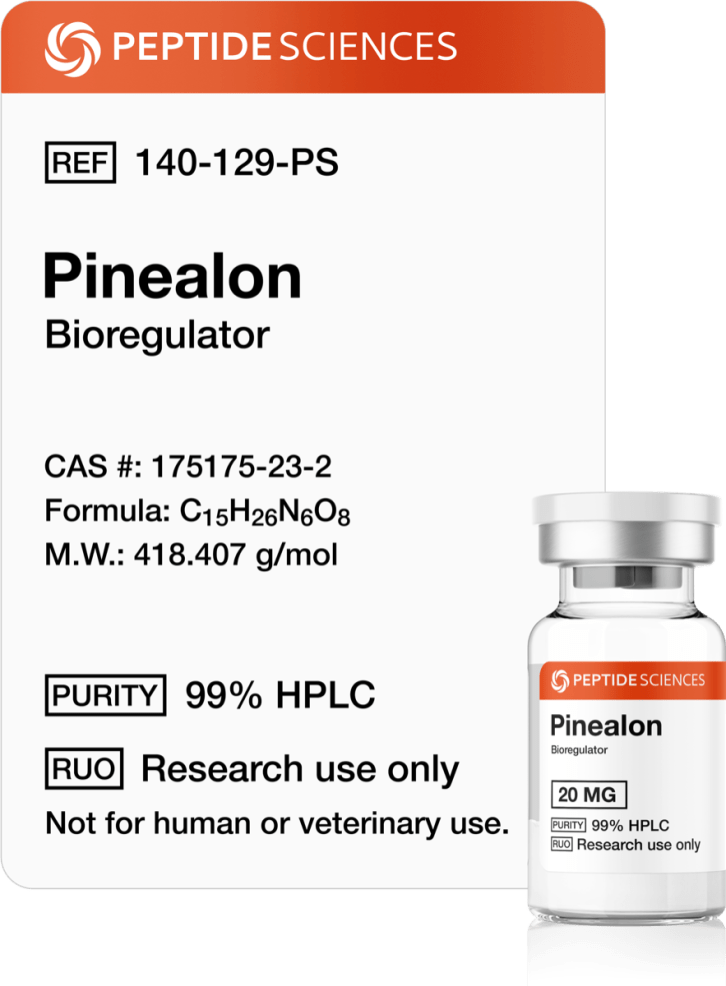
Oral Pinealon 20mg (Bioregulator)
$75.00
PRODUCT SHORT DESCRIPTION
Pinealon 20mg is a high-purity, synthetic short tripeptide bioregulator engineered to evaluate neuroprotection, cellular metabolism, and circadian rhythm dynamics within central nervous system models.
Oral Pinealon Research – Pinealon 20mg EDR Peptide
WooCommerce Short Product Description
- Pinealon 20mg laboratory research peptide
- Sequence: Glu-Asp-Arg (EDR)
- Peptide class: Synthetic tripeptide bioregulator
- Amino-acid count: 3
- Molecular formula: C15H26N6O8
- Molecular weight: approximately 418.40 g/mol
- CAS number: 175175-23-2
- Research areas: neuronal stress, oxidative signaling, gene-expression models and neuroplasticity
- Purity: ≥99% according to supplied specifications
- Testing: HPLC and Mass Spectrometry
- Form: Lyophilized research peptide
- Strictly for laboratory and in-vitro research only
- This 20mg product is not an oral Pinealon capsule or human-use preparation
Introduction to Pinealon 20mg
Pinealon 20mg is a synthetic short-chain peptide bioregulator composed of the amino-acid sequence Glu-Asp-Arg (EDR).
Developed within the Khavinson short-peptide research program, Pinealon has been investigated predominantly in preclinical models involving neuronal viability, oxidative stress, gene-expression pathways, dendritic morphology and age-associated cellular processes.
At USA PEPTIDE SCIENCES, Pinealon is supplied as a premium 20mg lyophilized laboratory research material for controlled neuroscience, cellular-biology, neuroplasticity and peptide-regulation studies.
Researchers searching for oral pinealon should distinguish historical research involving oral experimental administration from the product supplied on this page. The USA Peptide Sciences Pinealon 20mg material is a lyophilized research vial and is not marketed as an oral capsule, supplement or medicine.
Pinealon Peptide Research Overview
The scientific literature identifies Pinealon as the EDR tripeptide, comprising glutamic acid, aspartic acid and arginine.
Research involving Pinealon has explored several interconnected areas:
- Oxidative-stress responses
- Reactive oxygen species
- Neuronal cell viability
- MAPK/ERK-associated signaling
- Apoptosis-associated pathways
- Gene-expression regulation
- Dendritic-spine morphology
- Neuroplasticity
- Cellular aging models
- Experimental neurodegeneration models
Researchers reviewing oral pinealon literature should interpret these findings according to the study model and route used rather than assuming that oral administration has been pharmacokinetically validated for the USA Peptide Sciences research material.
Pinealon and Oxidative-Stress Research
One of the more directly studied aspects of Pinealon involves oxidative stress.
Experimental research using cerebellar granule cells, neutrophils and PC12 cells reported dose-dependent reductions in reactive oxygen species accumulation under induced oxidative-stress conditions.
Studies also examined changes in:
- Cellular viability
- Necrotic cell death
- ERK1/2 activation
- Cell-cycle activity
- Antioxidant-associated signaling
These findings make Pinealon peptide material relevant to laboratories studying cellular responses to oxidative challenge.
They do not establish antioxidant, neurological or therapeutic benefits in humans.
Pinealon Peptide and Neuroplasticity Research
Pinealon has also been studied in neuronal models involving dendritic structure.
Published experimental research with the EDR peptide has reported preservation of dendritic spines in models associated with amyloid-related synaptotoxicity and other neurodegenerative research paradigms.
Additional work has examined Pinealon in relation to:
- Dendritic-spine density
- Mushroom-spine populations
- Neuronal differentiation
- Dendritic arborization
- Neuroplasticity-associated genes
- Cellular aging of induced neurons
This gives Pinealon peptide research relevance to laboratories investigating structural neuronal responses under controlled experimental stress.
Pinealon and Gene-Expression Research
Pinealon is frequently discussed within the short-peptide literature as a potential regulator of gene expression.
However, this mechanism should be described carefully.
Research has used molecular modeling, docking and cellular experiments to investigate possible interactions between the EDR peptide and genomic or transcription-associated systems.
Proposed Pinealon-associated targets or pathways investigated in the literature include:
- CASP3
- SOD2
- PPARA
- PPARG
- GAP43
- APOE
- MAPK/ERK signaling
- Apoptosis-associated proteins
The evidence does not establish that Pinealon universally enters neuronal nuclei and directly switches specific genes on or off in intact organisms.
Researchers should therefore treat direct chromatin regulation as a proposed and actively investigated mechanism, not as a conclusively established biological action.
Oral Pinealon Research Context
The keyword oral pinealon appears frequently in searches surrounding the EDR peptide.
Some published reviews cite earlier studies in which Pinealon was administered orally in human research settings. However, those reports do not establish the pharmacokinetic behavior, intact systemic absorption, blood-brain-barrier penetration or clinical effectiveness of the USA Peptide Sciences product.
For this reason, oral pinealon should be discussed as a research-literature and search-intent term rather than a use instruction.
The Pinealon 20mg product on this page is supplied as:
- Lyophilized research material
- 20mg total peptide
- Laboratory-use-only product
- Not an oral capsule
- Not a dietary supplement
- Not an approved drug
- Not intended for human administration
Does Pinealon Cross the Blood-Brain Barrier?
Claims that Pinealon definitively penetrates the blood-brain barrier are common in secondary peptide descriptions, but direct pharmacokinetic evidence demonstrating that intact EDR reaches brain tissue at biologically relevant concentrations after peripheral or oral exposure remains limited.
For this reason, USA Peptide Sciences does not present blood-brain-barrier penetration as an established property of this research product.
Researchers investigating oral pinealon and central nervous system models should distinguish hypothesized transport mechanisms from experimentally demonstrated brain exposure.
Pinealon and Circadian or Melatonin Research
Pinealon is sometimes associated online with pineal-gland, circadian-rhythm and melatonin claims.
The currently available Pinealon literature is considerably stronger for oxidative-stress, neuronal and gene-expression research than for direct regulation of melatonin synthesis or circadian rhythms.
Therefore, this product page does not claim that Pinealon:
- Increases melatonin
- Regulates sleep
- Resets circadian rhythms
- Improves sleep quality
- Acts as a pineal hormone replacement
Researchers searching oral pinealon for these topics should distinguish Pinealon from other short peptides whose published research more directly involves pineal and circadian pathways.
Pinealon Research Specifications
| Property | Specification |
|---|---|
| Compound | Pinealon |
| Alternative designation | EDR peptide |
| Sequence | Glu-Asp-Arg |
| One-letter sequence | EDR |
| Amino-acid count | 3 |
| Classification | Synthetic short-chain peptide bioregulator |
| Molecular formula | C15H26N6O8 |
| Molecular weight | Approximately 418.40 g/mol |
| CAS number | 175175-23-2 |
| Quantity | 20mg |
| Form | Lyophilized research peptide |
| Purity | ≥99% according to supplied specifications |
| Analytical testing | HPLC and Mass Spectrometry |
| Primary research areas | Neurobiology, oxidative stress, neuronal viability, neuroplasticity and gene-expression models |
| Intended use | Laboratory and in-vitro research only |
Pinealon Peptide Benefits in Research
The phrase pinealon peptide benefits should be interpreted as research interest rather than a statement of established benefits in people.
Potential experimental advantages of Pinealon include its:
- Defined EDR tripeptide structure
- Small molecular size
- Relevance to oxidative-stress models
- Use in neuronal cell-culture research
- Association with dendritic-spine studies
- Application in gene-expression investigations
- Suitability for comparative short-peptide research
These properties do not establish cognitive, anti-aging, neuroprotective or therapeutic benefits in humans.
Pinealon Dosage and Research Quantity
Searches for pinealon dosage and pinealon peptide dosage frequently reflect human-use intent.
USA Peptide Sciences does not provide human dosing instructions.
For this product, the only appropriate quantity statement is:
20mg of Pinealon research material per vial.
The 20mg specification identifies the amount of laboratory material supplied and does not represent:
- A human dose
- A daily dose
- An oral Pinealon dose
- An injection schedule
- A treatment protocol
- A clinical recommendation
Experimental concentrations should be selected by qualified investigators according to the specific in-vitro or laboratory protocol.
Oral Pinealon Versus Lyophilized Pinealon
Oral pinealon generally refers to an administration format discussed in search queries or certain historical research reports.
The USA Peptide Sciences Pinealon 20mg product is different in presentation.
Oral Pinealon Search Context
The phrase may refer to:
- Historical research literature
- Capsule or tablet products sold elsewhere
- Oral bioavailability questions
- Human-use searches
USA Peptide Sciences Pinealon 20mg
This product is:
- A lyophilized research peptide
- Supplied in a 20mg vial
- Designed for laboratory investigation
- Not marketed as an oral formulation
- Not intended for self-administration
This distinction prevents the oral pinealon keyword from being interpreted as a use instruction.
Pinealon Quality Standards & Analytical Testing
At USA PEPTIDE SCIENCES, experimental reproducibility and compound identity are central to our research-material standards.
Every batch of Pinealon 20mg undergoes quality-control procedures according to the supplied product specifications.
High-Performance Liquid Chromatography (HPLC) is used to confirm a stated purity profile of 99% or greater, while Mass Spectrometry (MS) supports verification of molecular identity.
A batch-specific Certificate of Analysis accompanies each order according to the supplied product information.
Researchers evaluating Pinealon peptide material should use batch-specific analytical documentation when assessing:
- Purity
- Identity
- Lot consistency
- Molecular characteristics
- Experimental reproducibility
Claims of complete absence of specific contaminants should only be made where those contaminants were actually tested for on the corresponding COA.
Pinealon Storage and Handling Requirements
According to the supplied product specifications, lyophilized Pinealon 20mg should be stored long-term at -20°C.
Prior to controlled laboratory experimentation, preparation may be performed using an appropriate research-grade diluent compatible with the experimental design.
Following research reconstitution, the supplied specification calls for storage between 2°C and 8°C.
Researchers should use gentle swirling during laboratory dissolution and avoid aggressive mechanical agitation.
These instructions concern laboratory preparation only and are not administration guidance for oral pinealon or any other form of human use.
Related Pinealon Peptide Bioregulators
Researchers studying Pinealon, EDR peptide biology and short-chain bioregulators may also explore:
- Pinealon peptide comparison – Bronchogen 20mg Bioregulator — related short-peptide research material for comparative tissue-specific bioregulator studies.
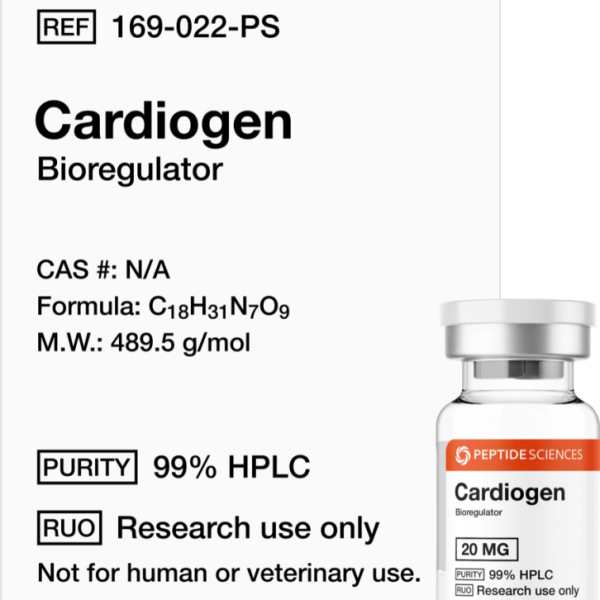
- Pinealon peptide comparison – Cardiogen 20mg Bioregulator — related research peptide for comparative cellular and gene-expression investigations.
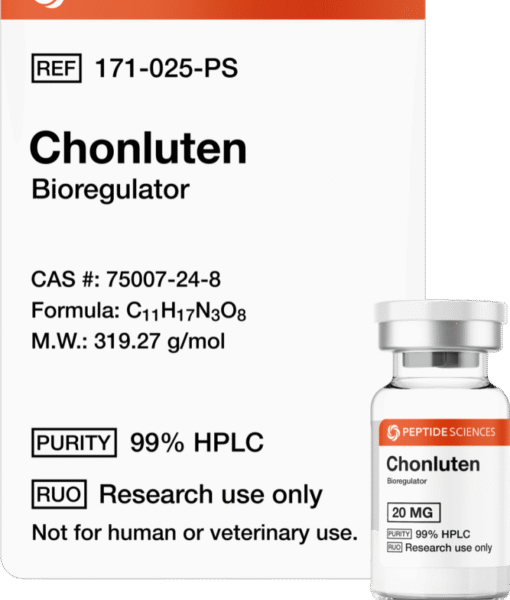
- Pinealon peptide comparison – Chonluten 20mg Bioregulator — another short-chain bioregulator for comparative molecular and tissue-model research.
Researchers can also review Pinealon peptide and EDR scientific research on PubMed for publications involving oxidative stress, neuronal models, neuroplasticity, gene expression and cellular aging.
Pinealon FAQ
What is Pinealon?
Pinealon is a synthetic tripeptide composed of Glu-Asp-Arg, abbreviated EDR.
It has been investigated primarily in experimental neuronal, oxidative-stress, neuroplasticity and gene-expression models.
What is Pinealon peptide?
Pinealon peptide is another name used for the EDR tripeptide.
Its amino-acid sequence is:
Glu-Asp-Arg
What is the Pinealon sequence?
The Pinealon sequence is:
Glu-Asp-Arg (EDR)
It contains three amino-acid residues.
What is oral Pinealon?
Oral pinealon refers to Pinealon discussed or presented in an oral administration format.
Some earlier research reports referenced oral administration, but this does not establish an approved oral treatment or validate the USA Peptide Sciences research vial for oral use.
Is this product oral Pinealon?
No.
Although oral pinealon is an important search and research term, the USA Peptide Sciences product described here is a 20mg lyophilized laboratory research vial, not an oral capsule or tablet.
Has oral Pinealon been researched?
Some publications and reviews reference oral pinealon in earlier research settings.
However, robust modern pharmacokinetic evidence establishing intact oral absorption, bioavailability and brain exposure remains limited.
These reports should not be converted into human-use or dosing recommendations.
Does oral Pinealon cross the blood-brain barrier?
Direct evidence demonstrating that intact oral pinealon reliably crosses the blood-brain barrier at defined biologically relevant concentrations is insufficient.
The product page should therefore not present BBB penetration as an established fact.
What is Pinealon’s molecular weight?
The molecular weight of Glu-Asp-Arg is approximately 418.40 g/mol.
What is the molecular formula of Pinealon?
The molecular formula is:
C15H26N6O8
What is Pinealon’s CAS number?
The CAS registry number associated with Glu-Asp-Arg is 175175-23-2.
What are Pinealon peptide benefits?
The phrase pinealon peptide benefits commonly refers to experimental observations involving oxidative stress, neuronal viability, dendritic morphology and gene-expression models.
These findings are primarily preclinical and do not establish medical, cognitive, anti-aging or neurological benefits in humans.
What is Pinealon studied for?
Pinealon research includes:
- Oxidative stress
- Reactive oxygen species
- Neuronal viability
- Neuroplasticity
- Dendritic spines
- Gene-expression pathways
- MAPK/ERK signaling
- Cellular aging
- Experimental neurodegenerative models
Is Pinealon an epigenetic peptide?
Pinealon is frequently described as an epigenetic peptide bioregulator in the originating research literature.
Molecular modeling and experimental studies have investigated possible interactions with DNA and transcription-associated pathways.
The precise mechanism remains under investigation, so direct genome regulation should not be treated as conclusively established in intact organisms.
Does Pinealon protect dendritic spines?
Preclinical studies involving EDR have reported preservation or restoration of dendritic-spine measures in specific neuronal and mouse models.
These findings support neuroplasticity research but do not establish treatment effects in humans.
Does Pinealon reduce oxidative stress?
Cell-based research has reported reductions in reactive oxygen species accumulation under experimentally induced oxidative-stress conditions.
This is a laboratory finding and not a claim that the USA Peptide Sciences product acts as an antioxidant treatment in humans.
Does Pinealon regulate melatonin?
Direct evidence demonstrating that Pinealon reliably increases or regulates melatonin production is insufficient.
For that reason, USA Peptide Sciences does not present melatonin enhancement as an established Pinealon mechanism.
What is Pinealon dosage?
For this USA Peptide Sciences research product, pinealon dosage should only refer to the supplied research quantity of 20mg per vial.
No human dose or administration schedule is provided.
What is Pinealon peptide dosage?
The phrase pinealon peptide dosage frequently relates to administration searches, but USA Peptide Sciences supplies Pinealon strictly for laboratory research.
Experimental concentration depends on the research model and should be established by the qualified investigator.
Are Pinealon peptides available in different forms?
The phrase pinealon peptides generally refers to Pinealon/EDR research materials.
This USA Peptide Sciences listing specifically provides a 20mg lyophilized laboratory research vial rather than an oral consumer formulation.
How should Pinealon be stored?
According to the supplied specifications, Pinealon should be stored at -20°C while lyophilized.
Following controlled laboratory reconstitution, the supplied storage specification is 2°C to 8°C.
What purity is Pinealon 20mg?
According to the supplied specifications, Pinealon 20mg has a purity profile of 99% or greater, with HPLC and Mass Spectrometry used for analytical evaluation.
Does Pinealon include a Certificate of Analysis?
Yes. According to the supplied product information, a batch-specific Certificate of Analysis accompanies the research material.
What related peptide bioregulators can researchers compare with Pinealon?
Researchers studying Pinealon can compare it with Bronchogen 20mg, Cardiogen 20mg and Chonluten 20mg under appropriately designed comparative laboratory protocols.
Where can researchers find Pinealon studies?
Researchers can review Pinealon peptide and EDR research on PubMed for literature concerning neuronal biology, oxidative stress, dendritic-spine morphology, neuroplasticity and proposed gene-regulatory pathways.
Is oral Pinealon intended for human use from USA Peptide Sciences?
No.
The term oral pinealon is included to address relevant research and search intent, but the USA Peptide Sciences Pinealon 20mg material is strictly for laboratory research.
It is not intended for oral human use, injection, supplementation, cognitive enhancement, sleep modification, anti-aging treatment, neurological treatment, veterinary use or clinical diagnostics.
Oral Pinealon Research Use Disclaimer
The Pinealon 20mg EDR peptide distributed by USA PEPTIDE SCIENCES is designated strictly for laboratory research purposes only.
The phrase oral pinealon throughout this page is used exclusively to discuss research literature and relevant search terminology. It does not mean that the USA Peptide Sciences 20mg lyophilized product is an oral formulation or approved for oral administration.
The material is not intended for human or veterinary consumption, cognitive enhancement, sleep or circadian treatment, anti-aging use, neurological treatment, direct clinical diagnostics or therapeutic administration.
All handling, measurement and experimental evaluation must be conducted exclusively by qualified scientific professionals within an appropriate controlled research environment.
Joshuah –
The ordering experience was smooth and the customer support team was very knowledgeable about this brain-directed bioregulator. They explained the Glu-Asp-Arg tetrapeptide sequence and its proposed role in supporting pineal gland and CNS function, which gave me confidence in the product. Shipping was fast with proper cold-chain packaging, and the 20mg vial arrived securely sealed with clear labeling and a Certificate of Analysis. I have been using this for a few weeks now and the improvements in my sleep quality and cognitive function have been genuinely noticeable. I fall asleep faster, experience deeper rest, and wake up feeling more mentally clear and refreshed. My daytime focus and mental clarity have also improved noticeably.
Graham –