
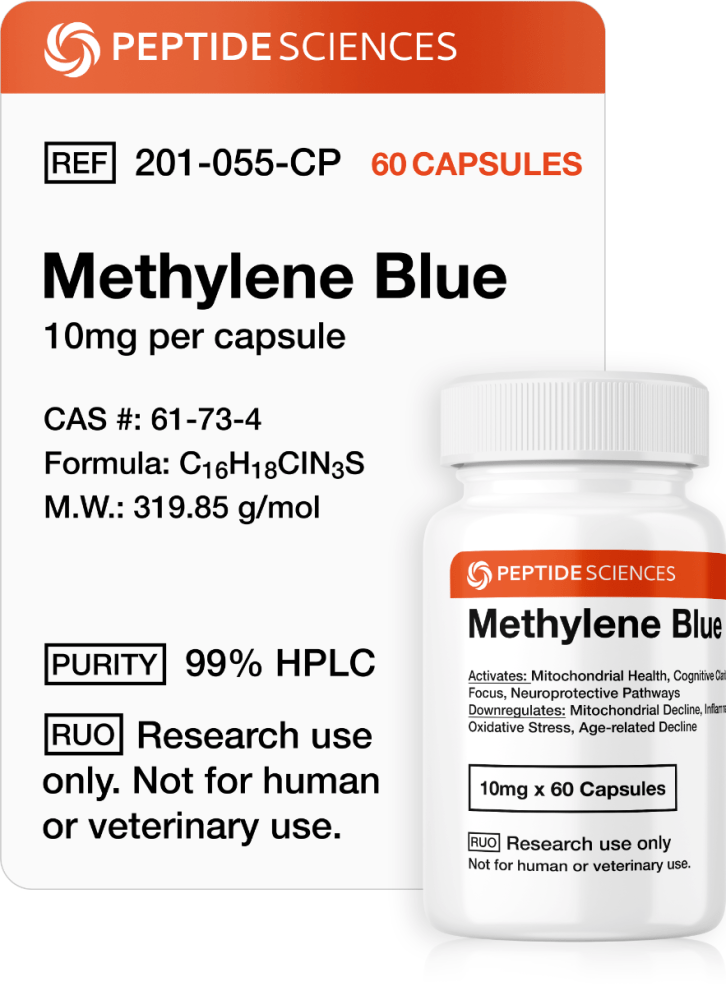
Methylene Blue Capsules (10mg x 60 Capsules = 600mg)
$35.00
PRODUCT SHORT DESCRIPTION
The Methylene Blue research platform delivers a highly stable cellular energy matrix of 60 capsules, each containing 100mg of premium Methylene Blue (600mg total mass). This encapsulated configuration is engineered for advanced laboratory investigations into mitochondrial electron transport, redox-mediated signaling, and neuroenergetics.
Methylene Blue Capsules 10mg x 60 – Research Compound
Introduction to Methylene Blue Capsules
Methylene Blue Capsules (10mg x 60 Capsules = 600mg) provide a standardized research platform for investigating mitochondrial respiration, cellular redox kinetics, oxidative metabolism, and neuroenergetic pathways.
Methylene Blue, also known as methylthioninium chloride, is a synthetic phenothiazine-derived redox-active compound characterized by its ability to cycle between oxidized and reduced molecular states.
At USA PEPTIDE SCIENCES, we supply methylene blue capsules in a precisely measured 10mg research format. Each container includes 60 capsules for a total supplied quantity of 600mg, providing biochemistry, neuroscience, mitochondrial-biology, and cellular-research laboratories with a convenient material for controlled experimental workflows.
For laboratories searching for methylene blue capsules, this encapsulated format provides standardized 10mg units for qualified laboratory investigation while minimizing preparation variability associated with bulk research material.
Methylene Blue Capsules Research Overview
The scientific interest surrounding methylene blue capsules centers strongly on the compound’s redox characteristics and ability to interact with mitochondrial electron-transfer processes.
Methylene blue can cycle reversibly between oxidized methylene blue and reduced leucomethylene blue. Experimental research has demonstrated that the compound can accept electrons from NADH and transfer them to cytochrome c, creating an alternative electron-transfer route under specific mitochondrial conditions.
Methylene Blue Research Applications
Key areas of laboratory investigation include:
- Alternative Mitochondrial Electron Transfer: Studying how methylene blue accepts electrons from NADH and transfers them toward cytochrome c under controlled mitochondrial conditions.
- Electron Transport Chain Research: Investigating alternative electron flow when mitochondrial Complex I or Complex III activity is experimentally compromised.
- Oxidative Phosphorylation: Measuring oxygen-consumption rates, mitochondrial respiration, membrane-potential-associated processes, and ATP-related cellular pathways.
- Redox Cycling: Examining reversible oxidation and reduction between methylene blue and leucomethylene blue.
- Nrf2/ARE Signaling: Studying relationships between methylene blue and antioxidant-response gene pathways in experimental cellular and animal models.
- Tau Protein Research: Evaluating interactions with tau aggregation, fibrillation, oxidation, and related protein-structure pathways.
- Neuroenergetics: Investigating mitochondrial respiration and cellular energy metabolism within controlled neuronal research models.
- Oxidative Stress Models: Studying concentration-dependent redox behavior and reactive oxygen species within appropriately designed experiments.
Researchers evaluating methylene blue capsules can review methylene blue mitochondrial and redox research on PubMed for relevant scientific literature.
How Methylene Blue Interacts With Mitochondrial Electron Transport
A major area of interest in methylene blue capsules research involves mitochondrial electron-transfer systems.
Under normal conditions, electrons derived from NADH enter the electron transport chain through Complex I and ultimately pass through additional carriers before reaching cytochrome c and Complex IV.
Experimental evidence indicates that methylene blue can participate as an alternative electron carrier. In its redox cycle, methylene blue can accept reducing equivalents and subsequently transfer electrons to cytochrome c.
Research has therefore examined its ability to maintain alternative electron flow when portions of the conventional mitochondrial respiratory chain are experimentally impaired.
Laboratory endpoints may include:
- Oxygen-consumption rate
- NADH oxidation
- Cytochrome c reduction
- Mitochondrial respiration
- Oxidative phosphorylation
- ATP-associated pathways
- Membrane-potential changes
- Cellular glycolytic responses
These mechanisms are experimental research findings and should not be interpreted as claims that USA Peptide Sciences methylene blue capsules provide therapeutic or cognitive benefits.
Methylene Blue Capsules and Redox Research
Methylene blue possesses unusual redox properties because it can undergo reversible reduction to leucomethylene blue and subsequent oxidation back to methylene blue.
This makes methylene blue capsules relevant to laboratories examining:
- Electron-transfer reactions
- Oxidative stress
- Antioxidant-response pathways
- Pro-oxidant effects at different experimental concentrations
- Mitochondrial respiratory function
- Nrf2-associated transcription
- Cellular stress responses
The concentration-dependent nature of these effects is particularly important when designing experimental systems because methylene blue cannot accurately be described as only an antioxidant or only a pro-oxidant under every condition.
Methylene Blue and Nrf2 Research
Published preclinical work has examined methylene blue in relation to the Nrf2/antioxidant response element (ARE)pathway.
Research models have reported changes in Nrf2-regulated genes alongside alterations in oxidative stress and tau-associated pathology. These findings support continued investigation into the relationship between methylene blue, cellular redox regulation, and stress-response transcription.
For methylene blue capsules research, these mechanisms may be evaluated using appropriately controlled cellular, biochemical, or preclinical systems.
Methylene Blue Capsules and Tau Protein Research
Another important research area involves tau protein.
Methylene blue has been investigated experimentally for its ability to alter tau aggregation and fibrillation. However, the literature is nuanced: some studies report inhibition of tau fibril formation, while other work indicates that methylene blue may affect different tau assemblies differently.
More recent molecular research has also investigated methylene-blue-mediated oxidation of tau cysteine residues and changes in tau fibrillation pathways.
Accordingly, methylene blue capsules should be described as a tool for tau-pathway research rather than as an established neurodegenerative treatment.
Advantages of the 10mg Encapsulated Research Matrix
Working with bulk or solution-based redox-active compounds can introduce experimental variability from weighing, preparation, environmental exposure, and concentration differences.
The methylene blue capsules format provides:
- 10mg per capsule
- 60 capsules per container
- 600mg total supplied material
- Pre-measured units for laboratory preparation
- Reduced bulk-material handling
- Convenient batch tracking
- Light-protected container storage
- Standardized material for repeated experimental runs
The encapsulated format does not mean the material is intended as a dietary supplement or for oral human administration.
Methylene Blue Capsules Research Specifications
| Property | Specification |
|---|---|
| Compound | Methylene Blue |
| Alternative name | Methylthioninium Chloride |
| Chemical class | Phenothiazine-derived redox-active compound |
| Quantity per capsule | 10mg |
| Capsule count | 60 |
| Total supplied quantity | 600mg |
| Format | Encapsulated laboratory research material |
| Analytical testing | HPLC according to supplied specifications |
| Documentation | Batch-specific Certificate of Analysis |
| Storage | 15°C to 25°C; cool, dry and protected from light |
| Intended use | Laboratory research only |
Methylene Blue Capsule Quality & Analytical Testing
At USA PEPTIDE SCIENCES, maintaining compound identity, consistency, and research reproducibility is central to our laboratory-material standards.
The Methylene Blue raw material used in the methylene blue capsule format undergoes analytical quality-control procedures designed to identify unwanted impurities and support consistent experimental performance.
High-Performance Liquid Chromatography (HPLC) is used according to the supplied product specifications to evaluate chemical purity.
A batch-specific Certificate of Analysis (COA) accompanies each research order, supporting material traceability across repeated experimental studies.
I have not described this material as “pharmaceutical grade” because that specific designation was not supplied or independently established for this product.
Methylene Blue Capsules Storage and Handling
According to the supplied product specifications, methylene blue capsules should be stored in a cool, dry environment away from direct sunlight.
An ambient storage range of approximately 15°C to 25°C is specified.
Because methylene blue is light sensitive, the container should remain properly sealed and protected from unnecessary light exposure during laboratory storage.
The supplied desiccant should remain inside the container to reduce humidity exposure.
Laboratories should also document:
- Batch number
- Storage conditions
- Opening date
- Experimental allocation
- Environmental exposure
- Remaining research inventory
Methylene Blue Capsules vs Liquid Research Formats
The phrase methylene blue capsules vs liquid commonly reflects interest in differences between two research-material formats.
Methylene Blue Capsules
Methylene blue capsules offer pre-measured research quantities, easier inventory tracking, reduced weighing requirements, and protection of the dry material before experimental preparation.
Liquid Methylene Blue
Liquid preparations may offer direct access to a pre-prepared concentration but can introduce additional considerations involving solvent composition, concentration verification, light exposure, oxidation state, and solution stability.
Neither format is universally superior. The appropriate form depends on the laboratory protocol, analytical method, desired concentration, and experimental controls.
The USA Peptide Sciences product described here is supplied as 10mg x 60 research capsules.
Related Methylene Blue Research Compounds
Researchers studying methylene blue capsules, mitochondrial pathways, metabolic regulation, or cellular energy systems may also explore:
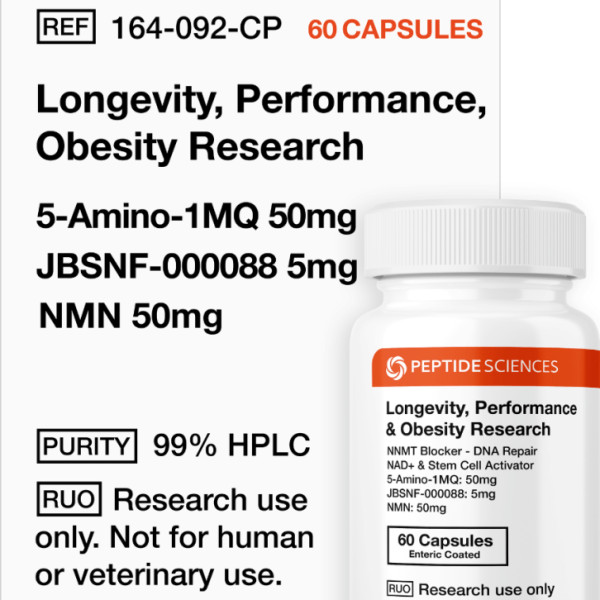
- Methylene Blue research comparison – 5-Amino-1MQ 50mg Capsules — related encapsulated research compound for metabolic and cellular-pathway investigation.
- Methylene Blue research comparison – Longevity & Performance Research Capsules — related research formulation for comparative metabolic and cellular studies.
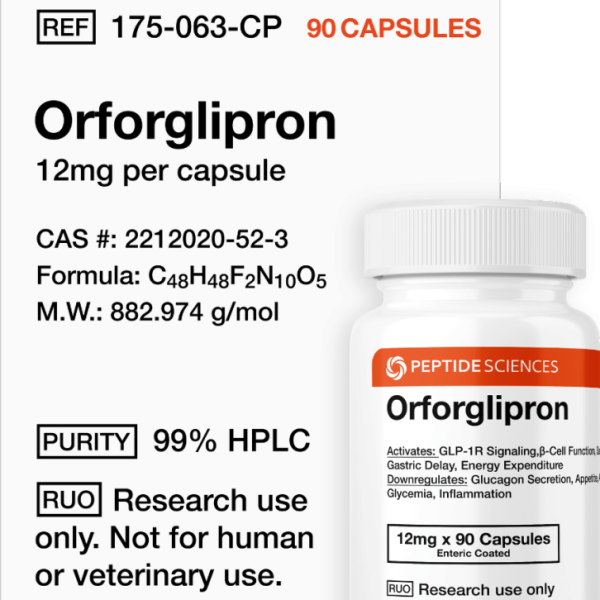
- Methylene Blue research comparison – Orforglipron 12mg x 90 Capsules — related encapsulated research compound for comparative metabolic signaling studies.
Methylene Blue Capsules FAQ
What are methylene blue capsules?
Methylene blue capsules are an encapsulated format of methylthioninium chloride supplied in pre-measured units.
The USA Peptide Sciences product contains 10mg per capsule, 60 capsules per container, and 600mg total research material.
What is a methylene blue capsule?
A methylene blue capsule is one pre-measured 10mg unit of the research compound supplied within this 60-count laboratory configuration.
It is not supplied as a dietary supplement or human-use medication.
What are methylene blue capsules studied for?
Methylene blue capsules provide research material for experiments involving mitochondrial respiration, alternative electron transfer, redox chemistry, oxidative stress, Nrf2-associated signaling, tau biology, and neuroenergetic pathways.
How does methylene blue affect mitochondrial electron transfer?
Experimental studies indicate that methylene blue can act as an alternative electron carrier by accepting electrons from NADH and transferring them to cytochrome c.
This mechanism has been investigated particularly under conditions where conventional mitochondrial electron transport is impaired.
Does methylene blue bypass the mitochondrial electron transport chain?
Not completely.
Methylene blue can provide an alternative electron-transfer route under certain experimental conditions. Research has shown electron transfer from NADH toward cytochrome c even when Complex I or III function is inhibited.
It is more accurate to describe this as alternative mitochondrial electron transfer rather than saying methylene blue completely bypasses the entire ETC.
Is methylene blue studied for Nrf2 signaling?
Yes. Methylene blue has been investigated in preclinical systems involving Nrf2/ARE-associated gene expression and oxidative-stress responses.
Is methylene blue studied for tau aggregation?
Yes. Methylene blue has been studied extensively in tau-related experimental models.
The findings are complex: research has reported effects on fibril formation, tau oxidation, aggregation states, and related molecular pathways. These findings do not establish the USA Peptide Sciences research product as a treatment for neurodegenerative disease.
What are the best methylene blue capsules?
The phrase best methylene blue capsules is subjective and should not be treated as a scientifically established product ranking.
For research sourcing, laboratories may instead evaluate measurable criteria such as compound identity, analytical testing, Certificate of Analysis documentation, labeled quantity, batch traceability, storage conditions, and supplier transparency.
Are these pharmaceutical grade methylene blue capsules?
USA Peptide Sciences does not make a pharmaceutical-grade claim on the basis of the product information supplied here.
The phrase pharmaceutical grade methylene blue capsules therefore should not be applied to this product unless specific manufacturing and regulatory documentation independently supports that designation.
This product is sold strictly as laboratory research material.
What are supreme methylene blue capsules?
Supreme methylene blue capsules appears as a search phrase that may refer to another product, brand, or descriptive marketing term.
USA Peptide Sciences does not identify this research product as “Supreme Methylene Blue,” and no affiliation with a separately branded product is implied.
What is the difference between methylene blue capsules vs liquid?
Methylene blue capsules vs liquid primarily describes differences in research format.
Capsules provide pre-measured dry material, while liquid preparations may provide a pre-established solution concentration. Experimental suitability depends on the laboratory protocol, solvent system, analytical controls, storage requirements, and desired concentration.
Can qualified laboratories buy methylene blue capsules?
Yes. Researchers searching buy methylene blue capsules can obtain the USA Peptide Sciences 10mg x 60 configuration strictly for qualified laboratory research.
The availability statement does not imply approval for human consumption.
How much Methylene Blue is in each capsule?
Each methylene blue capsule contains 10mg of research material according to the supplied specifications.
How many methylene blue capsules are supplied?
Each container contains 60 methylene blue capsules.
What is the total amount of Methylene Blue supplied?
The complete container provides:
10mg x 60 capsules = 600mg total Methylene Blue
How should methylene blue capsules be stored?
According to the supplied specifications, methylene blue capsules should be stored in a cool, dry environment at approximately 15°C to 25°C and protected from direct light and excess humidity.
Do methylene blue capsules include a Certificate of Analysis?
Yes. According to the supplied product information, a batch-specific Certificate of Analysis accompanies each research order.
What related research compounds can laboratories compare with Methylene Blue?
Researchers may compare Methylene Blue with 5-Amino-1MQ 50mg research capsules, Longevity & Performance research capsules, and Orforglipron 12mg research capsules in appropriately designed comparative laboratory studies.
Can researchers find Methylene Blue studies on PubMed?
Yes. Researchers can review methylene blue mitochondrial, redox and tau research on PubMed for peer-reviewed literature involving electron transport, oxidative metabolism, Nrf2 signaling, tau biology, mitochondrial respiration, and related pathways.
Are methylene blue capsules intended for human use?
No. Methylene blue capsules supplied by USA Peptide Sciences are designated strictly for laboratory research.
They are not intended for human or veterinary consumption, supplementation, cognitive enhancement, therapeutic administration, diagnostic use, treatment of neurological disease, or any other human application.
Methylene Blue Capsules Research Use Disclaimer
The Methylene Blue 10mg x 60 Capsules distributed by USA PEPTIDE SCIENCES are designated strictly for laboratory research purposes only.
The term methylene blue capsules throughout this page describes the encapsulated format of the laboratory research material and does not indicate a dietary supplement, prescription medicine, pharmaceutical product, or consumer-use preparation.
Under no circumstances are these products intended for human or veterinary consumption, direct clinical diagnostics, therapeutic drug administration, cognitive enhancement, or treatment of any disease.
All handling, measuring, and experimental evaluation must be performed exclusively by qualified scientific professionals within an appropriate controlled research facility.
Malinda –
Alford –
I have been researching mitochondrial support compounds and this methylene blue supply is exactly what I needed. The team was responsive about the dosing, explaining that clinical protocols usually begin at 50mg once or twice daily, but that smaller capsules like these are ideal for personalized titration. Shipping was prompt with secure packaging. I’ve observed improved cognitive endurance in my research subjects. The 600mg total supply is excellent value for extended protocols.
Anna –
I have used several nootropic compounds, and this methylene blue formulation stands out for its purity and convenience. The ordering process was seamless, and the team answered my questions about the USP-grade quality. Shipping was fast with secure packaging. I’ve been incorporating this into research protocols and the effects on mitochondrial function and oxidative stress markers have been notable. The 10mg capsules allow for precise dosing and the 60-capsule supply is perfect for extended observation periods.
Amelia –
I’m uncertain this methylene blue formulation lived up to expectations for my research. Ordering was fine and product arrived quickly, but support gave a generic response when I asked about the 10mg dose rationale. The effects on cognitive markers were marginal and hard to distinguish from baseline variation. I’ve since read that while low doses are used for mitochondrial support, the evidence base for cognitive enhancement remains limited and reviews often mix subjective anecdote with limited clinical evidence. For the cost, I expected more consistent results. Three stars for decent shipping and packaging.
Dale –
First time using a low-dose methylene blue protocol and I’m impressed. The support team explained that while higher doses are used for specific conditions, this 10mg capsule allows for very precise low-dose research typical of cognitive support applications. Shipping was fast and packaging professional. Within a few weeks, I observed enhanced focus and mental stamina in my research. The capsule form eliminates the staining issues common with liquid methylene blue.
Dayne –
Disappointed with this one. The website was easy to use and I received my order, but the 10mg single-capsule dose was too low to produce meaningful research results. I reached out to support but didn’t get a clear explanation on whether multiple capsules could be used for higher doses. The lack of flexibility in the 10mg format limited my ability to test the 50-200mg ranges used in clinical research. While the product quality seemed fine, the fixed low dose didn’t meet my research needs. I might try a liquid formulation or higher-dose capsules next time.