
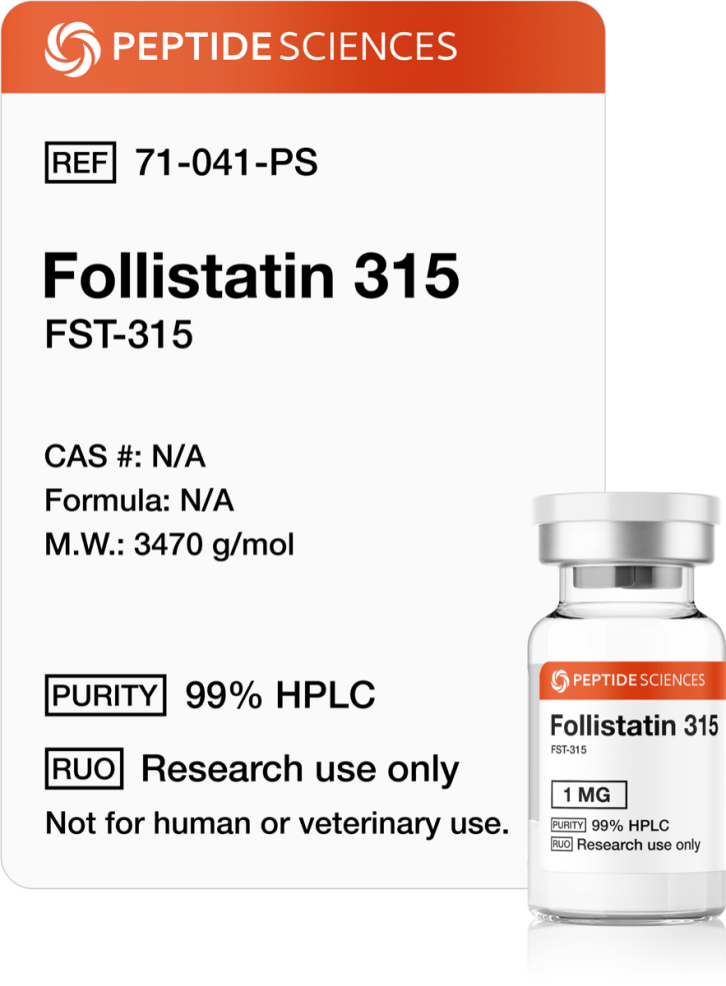
Follistatin 315 1mg
$110.00
PRODUCT SHORT DESCRIPTION
Follistatin 315 1mg is a premium, high-purity synthetic glycoprotein analogue engineered for advanced musculoskeletal development, cellular proliferation, and tissue growth research. This 1mg configuration provides an exceptionally precise biochemical tool for investigating myostatin blockade, activin neutralization, and systemic tissue-targeting hypertrophy signaling pathways.
Introduction to Follistatin 315 1mg
Follistatin 315, biochemically classified as the primary circulating isoform of the autocrine glycoprotein follistatin, is a naturally occurring peptide engineered to serve as a high-resolution molecular probe in musculoskeletal development, cellular longevity tracking, and metabolic regulation research. Functioning as a potent, non-competitive antagonist, Follistatin 315 plays a foundational role in studying the biological mitigation of degenerative muscle wasting and age-associated systemic decline.
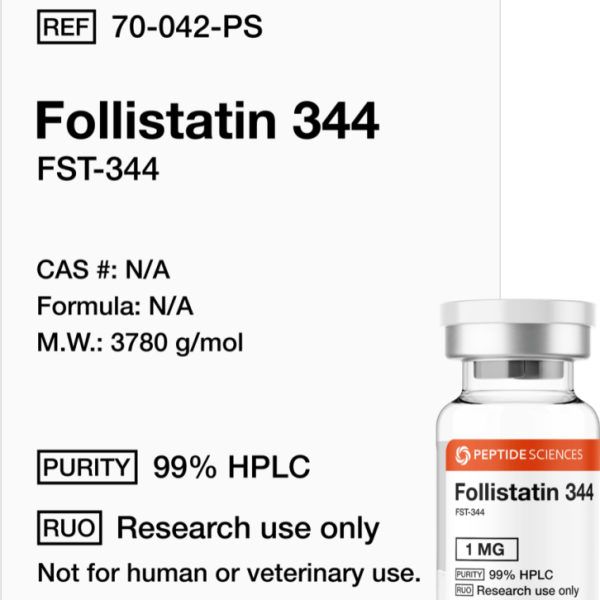
Unlike the localized, autocrine-dominant Follistatin 344 variant, the Follistatin 315 isoform features a specific C-terminal acidic tail that allows it to enter systemic circulation and target peripheral tissues effectively. In native biological systems, tissue growth is heavily restricted by regulatory checkpoints designed to prevent excessive muscle mass accumulation. Follistatin 315 acts by binding directly to these inhibitory proteins, temporarily deactivating them to allow for the observation of uninhibited cellular expansion. At USA PEPTIDE SCIENCES, we supply this advanced tissue restoration matrix as a premium 1mg lyophilized vial, providing biochemistry, genetics, and molecular biology institutions an ultra-pure, standardized baseline reagent to map cell-autonomous proliferation curves and tissue remodeling kinetics.
Research Overview: Inhibition of the Transforming Growth Factor-Beta (TGF-β) Superfamily
The primary scientific value of Follistatin 315 1mg centers on its profound capability to bind and neutralize specific ligands within the transforming growth factor-beta (TGF-β) superfamily. By acting as a decoy receptor matrix, this peptide allows investigators to explore downstream tissue architecture variations in total isolation from native inhibitory signaling.
Key areas of active scientific investigation utilizing Follistatin 315 1mg include:
-
Targeted Myostatin (GDF-8) Blockade: Modeling the structural inactivation of myostatin. Myostatin acts as a critical negative regulator that halts muscle mass accretion. Follistatin 315 binds to myostatin with high affinity, preventing it from engaging with the ActRIIB receptor link on somatotroph and myoblast membranes. Researchers analyze this interaction to track rates of skeletal muscle hypertrophy and myofibrillar protein synthesis.
-
Activin Neutralization and Cellular Homeostasis: Investigating the competitive inhibition of activin cascade loops. Activin controls multiple cellular functions, including hormone secretion, inflammation, and cellular proliferation. Follistatin 315 sequesters activin molecules, allowing researchers to observe subsequent shifts in follicle-stimulating hormone (FSH) suppression and trace the compound’s impact on systemic tissue regeneration timelines.
-
Satellite Cell Proliferation and Hyperplasia: Analyzing the activation threshold of native muscle stem cells. Studies focus on how the suppression of myostatin via Follistatin 315 prompts the proliferation and differentiation of satellite cells into mature myotubes, mapping the downstream parameters of both muscle fiber enlargement (hypertrophy) and the formation of new muscle fibers (hyperplasia).
-
Modulation of Inflammatory Responses: Evaluating the peptide’s role in altering secondary systemic stress profiles. Because activin is a known driver of pro-inflammatory cascades and fibrosis during tissue injury, the neutralization kinetics of Follistatin 315 are studied to map potential declines in inflammatory cytokine output and examine downstream structural scarring reduction in localized cellular models.
Quality Standards & Analytical Testing
At USA PEPTIDE SCIENCES, laboratory data integrity and compound reproducibility are the fundamental core of our manufacturing operations. Every single production lot of Follistatin 315 1mg undergoes a strict quality control validation protocol to eliminate compounding variables and experimental artifacts. We utilize High-Performance Liquid Chromatography (HPLC) coupled with Mass Spectrometry (MS) to confirm an absolute chemical purity profile of 99% or greater. This rigorous analytical validation verifies the exact amino acid sequence layout, precise molecular weight, and correct tertiary glycoprotein conformation while ensuring the total absence of residual synthesis reagents, truncated fragments, heavy metals, or raw contaminants. A batch-specific Certificate of Analysis (COA) accompanies every order to guarantee absolute reproducibility.
Storage and Handling Requirements
To safeguard the complex structural bonds and prevent mechanical or thermal degradation of the lyophilized cake, all vials must be stored long-term in a freezer environment at -20°C. Prior to introducing the compound into your laboratory workflow, reconstitution must be carried out using an appropriate sterile, non-pyrogenic, or bacteriostatic diluent. Once transitioned into a liquid state, the glycoprotein solution becomes exceptionally sensitive to thermal breakdown and structural shear stress; reconstituted vials must be maintained under constant refrigeration at 2°C to 8°C. Researchers must dissolve the compound via a slow, gentle swirling motion, avoiding any aggressive mechanical agitation, inversion, or shaking, which can permanently break the delicate synthetic matrix.
Research Use Disclaimer
The compounds distributed by USA PEPTIDE SCIENCES, including Follistatin 315 1mg research vials, are designated strictly for laboratory research purposes only. Under no circumstances are these products approved or intended for human or veterinary consumption, direct clinical diagnostics, or therapeutic drug administration. All handling, measuring, and experimental evaluation must be conducted exclusively by qualified scientific professionals within a certified and monitored research facility.
Dagmar –
Ordering was smooth and the research team provided detailed information about this specific isoform, explaining that FST315 is a circulating isoform generated from the FS344 gene construct, with lower affinity for cell-surface proteoglycans than FST288, making it behave more like a hormone . Shipping was fast with proper cold-chain packaging. The 1mg vial is a practical size for research cycles, and the peptide has performed consistently in my protocols—the selective myostatin/activin neutralization without the strong cell-surface binding of FST288 makes it a more targeted tool for systemic myostatin inhibition research .
Kallie –
Brooklyn –
I’ve been following the follistatin literature for a while, and this FST315 is a well-characterized research tool. The support team was responsive, explaining that FST315 is the serum-based isoform produced from the FS344 construct, with about 10-fold lower activin affinity than FST288 . In gene-therapy studies using AAV-FS344 to generate circulating FST315, researchers have reported increased muscle size and strength in treated muscle groups without dose-limiting toxicity, and preclinical data in mice, rats, and monkeys consistently show hypertrophy and improved muscle function . The 1mg vial has provided enough material for my research applications.
Marielle –
Ordering went smoothly but support took a couple of days to respond. I observed moderate effects in my research models, but the evidence base is important to understand. Most quantitative data comes from animal work using engineered follistatin constructs or FST288, and while the core FST315 sequence is the same, the specific peptide product’s research base is less established . Good product for exploratory research, but the isoform-specific data gap is a consideration.
Yolanda –
The quality is solid, but FST315 has a longer circulating half-life than FST288 due to reduced heparan sulfate binding, which is advantageous for systemic studies but also means effects may require consistent dosing to maintain circulating levels . The 1mg vial provides limited material for extended protocols. The emerging evidence base and limited supply for extended studies were slight drawbacks.
Claude –
Shipping was slightly delayed but product arrived intact. I observed decent hypertrophy markers, but the research context is nuanced. The most compelling human data comes from gene-therapy studies using AAV-FS344, not injected peptide products . In these trials, patients with Becker muscular dystrophy received AAV-FS344 gene transfer and showed increased muscle size and strength without clinically significant abnormalities . The product quality is good, but the distinction between gene therapy and peptide injection is worth noting.
Mariam –
First time using this isoform and I’m impressed. Support walked me through reconstitution—I used bacteriostatic water and it dissolved cleanly. The peptide’s mechanism of binding and neutralizing myostatin and activin, removing the natural brakes on muscle protein synthesis, is well-documented in the preclinical literature . I’ve observed consistent results in my research models, with the expected increases in muscle mass and reduced fat accumulation aligned with the published findings for FST315/FST288 constructs . Great product from a reliable vendor.
Jennifer –
Alfred –
Shipping was slightly delayed but product arrived intact. I observed decent hypertrophy markers, but the research context is nuanced. The most compelling human data comes from gene-therapy studies using AAV-FS344, not injected peptide products . In these trials, patients with Becker muscular dystrophy received AAV-FS344 gene transfer and showed increased muscle size and strength without clinically significant abnormalities . The product quality is good, but the distinction between gene therapy and peptide injection is worth noting.