
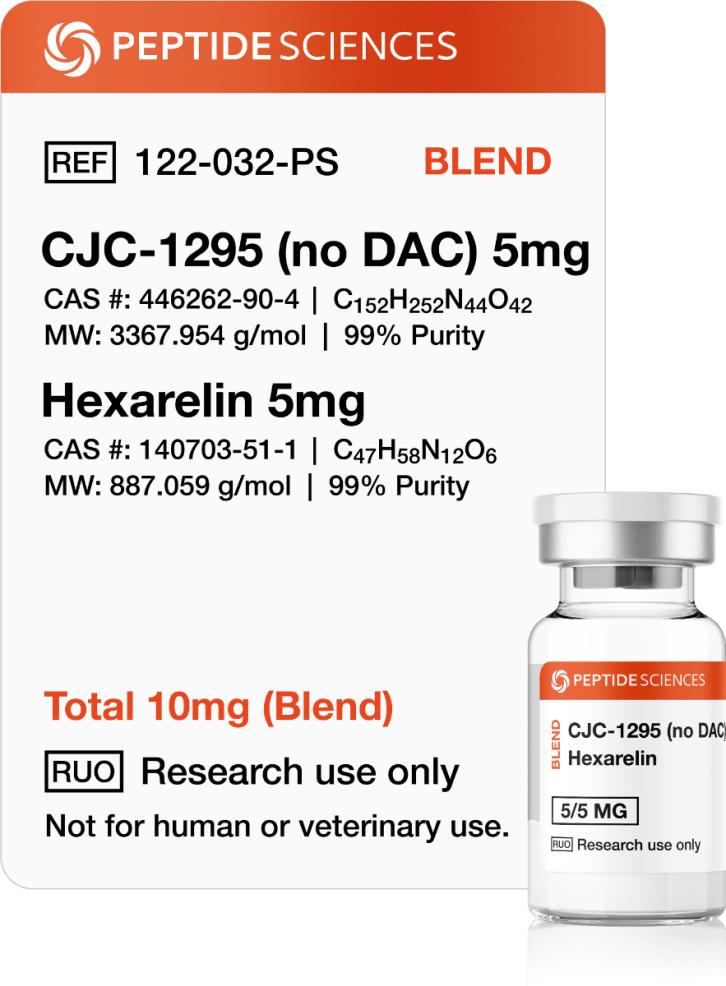
Hexarelin CJC 1295 (no DAC) Blend
$95.00
PRODUCT SHORT DESCRIPTION
The CJC-1295 No DAC and Hexarelin formulation delivers an advanced, dual-action 10mg (10000mcg) research blend combining two synergistic synthetic peptides in a single vial. This ratio is engineered strictly for investigating dual-receptor somatotroph coordination, optimized growth hormone (GH) pulsatility curves, and growth hormone secretagogue receptor mechanics.
Hexarelin CJC 1295 10mg – Dual-Receptor Research Peptide Blend
WooCommerce Short Product Description
- Hexarelin CJC 1295 10mg laboratory research blend
- Contains CJC-1295 No DAC / Modified GRF (1-29) and Hexarelin
- Total supplied blend quantity: 10mg
- CJC-1295 No DAC class: 29-amino-acid modified GHRH analogue
- Hexarelin class: Synthetic hexapeptide growth hormone secretagogue
- Hexarelin sequence: His-D-2-Methyl-Trp-Ala-Trp-D-Phe-Lys-NH₂
- Primary research systems: GHRH receptor and GHS-R1a-associated signaling
- Additional Hexarelin research target: CD36
- Purity: ≥99% according to supplied specifications
- Analytical testing: HPLC and Mass Spectrometry
- Format: Lyophilized research peptide blend
- Strictly for laboratory and in-vitro research only
Introduction to the Dual-Action Somatotropic Matrix
The CJC-1295 No DAC, Hexarelin 10mg Blend represents a sophisticated dual-receptor research platform designed to investigate interactions along the mammalian somatotropic axis.
Rather than targeting a single receptor system, this hexarelin cjc 1295 formulation combines two structurally and pharmacologically distinct synthetic peptides: a modified growth hormone-releasing hormone analogue and a potent growth hormone secretagogue.
The CJC-1295 No DAC component, more precisely described as Modified GRF (1-29), provides the GHRH-receptor-associated arm of the research matrix.
Hexarelin provides the GHS-R1a-associated secretagogue component and has also been investigated through the non-GHSR receptor CD36 in cardiovascular tissue models.
At USA PEPTIDE SCIENCES, this hexarelin cjc 1295 combination is supplied as a precisely prepared 10mg lyophilized research blend for controlled endocrinology, receptor-signaling, metabolic-biochemistry and molecular-biology studies.
The product is intended to provide laboratories with a standardized matrix for examining receptor cross-talk, pituitary signaling, somatostatin-associated regulation and secondary Hexarelin-specific molecular pathways.
Hexarelin CJC 1295 Research Overview
The primary scientific interest surrounding hexarelin cjc 1295 research lies in the convergence of two different receptor systems involved in growth-hormone-associated signaling.
GHRH receptor activation and growth hormone secretagogue receptor activation use overlapping but distinct intracellular signaling mechanisms.
Historical human research combining Hexarelin with GHRH has demonstrated substantially greater GH responses than either compound alone under certain experimental conditions.
This provides a mechanistic basis for studying hexarelin cjc 1295 in models involving:
- GHRH receptor signaling
- GHS-R1a-associated pathways
- Pituitary somatotroph biology
- cAMP-associated signaling
- Phospholipase C pathways
- Calcium-associated intracellular signaling
- Secretory vesicle exocytosis
- Somatostatin-associated regulation
- Receptor desensitization
- Neuroendocrine feedback
- GH/IGF-1-axis signaling
- CD36-associated peripheral Hexarelin pathways
Researchers can review Hexarelin, GHRH and growth hormone secretagogue research on PubMed for peer-reviewed studies involving these mechanisms.
Hexarelin Research Component
Hexarelin, also known in pharmacological literature as examorelin, is a synthetic hexapeptide related structurally to GHRP-6.
Its sequence is:
His-D-2-Methyl-Trp-Ala-Trp-D-Phe-Lys-NH₂
Hexarelin belongs to the growth hormone-releasing peptide family and has been extensively investigated as a growth hormone secretagogue.
Within the hexarelin cjc 1295 matrix, Hexarelin provides the GHS-R-associated signaling arm.
Hexarelin Research Areas
Laboratory investigation may include:
- GHS-R1a signaling
- Pituitary somatotroph responses
- Secretagogue potency
- GH-associated signaling
- Calcium-dependent pathways
- Neuroendocrine feedback
- Prolactin-associated responses
- Cortisol-associated responses
- Receptor desensitization
- CD36 binding
- Cardiovascular cell signaling
These are research endpoints and do not represent endocrine, cardiovascular or performance benefits in humans.
CJC-1295 No DAC / Modified GRF 1-29 Research Component
The second component of the hexarelin cjc 1295 blend is commercially described as CJC-1295 No DAC.
For precise scientific terminology, the no-DAC material is better described as Modified GRF (1-29).
It is a modified 29-amino-acid analogue based on the biologically active N-terminal region of human GHRH.
The Modified GRF 1-29 structure incorporates substitutions designed to improve stability against rapid enzymatic degradation relative to native GHRH (1-29).
The research-market names commonly include:
- CJC-1295 No DAC
- CJC-1295 without DAC
- Modified GRF (1-29)
- Mod GRF 1-29
- Modified GHRH (1-29)
The no-DAC designation distinguishes this compound from original CJC-1295 containing the albumin-binding Drug Affinity Complex.
Hexarelin CJC 1295 Dual-Receptor Signaling
The biological rationale for hexarelin cjc 1295 research comes from the use of separate receptor-linked signaling systems.
GHRH-Receptor Pathway
Modified GRF (1-29) interacts with the GHRH receptor.
This receptor is associated with:
- Adenylyl cyclase
- cAMP production
- Protein kinase-associated pathways
- Pituitary somatotroph signaling
- Growth-hormone-associated transcription and secretion
Growth Hormone Secretagogue Pathway
Hexarelin acts through growth hormone secretagogue receptor-associated signaling.
This system involves signaling pathways distinct from the GHRH receptor and may include:
- Phospholipase C
- IP₃-associated signaling
- Intracellular calcium mobilization
- Secretory responses
- Hypothalamic-pituitary interaction
The convergence of these systems gives the hexarelin cjc 1295 blend its value as a dual-receptor experimental platform.
Hexarelin CJC 1295 and Synergistic Signaling Research
Published human research involving Hexarelin and GHRH has demonstrated synergistic GH-associated responses under certain experimental conditions.
One study found the combined response exceeded the arithmetic sum of responses produced by Hexarelin and GHRH separately.
However, synergy is not a fixed property that should be assumed under every condition.
Repeated-stimulation experiments demonstrated that the magnitude of the response changed with timing and that measurable synergism could be lost after repeated exposure.
For this reason, hexarelin cjc 1295 should be positioned as a research platform for investigating potential synergistic signaling rather than as a formulation guaranteed to produce a predetermined response.
Relevant variables include:
- Concentration
- Exposure interval
- Receptor expression
- Cell type
- Somatostatinergic tone
- Previous receptor stimulation
- Experimental species
- Assay design
Hexarelin and Somatostatin Research
Somatostatin is an important inhibitory regulator of growth hormone secretion.
The relationship between Hexarelin and somatostatin is more complex than straightforward suppression.
Experimental research has shown that altering somatostatin tone can substantially affect Hexarelin-induced responses.
Studies combining Hexarelin and GHRH also found substantial secretory responses despite experimentally elevated somatostatin.
This makes hexarelin cjc 1295 relevant to laboratory investigation of:
- Somatostatinergic tone
- GHRH signaling
- GHS-associated signaling
- Pituitary responsiveness
- Feedback inhibition
- Neuroendocrine cross-talk
The formulation should not simply be described as “blocking” or universally suppressing somatostatin.
Hexarelin and CD36 Research
Hexarelin has also attracted scientific attention because its biological activity is not limited to pituitary GHS-R-associated pathways.
Research identified CD36, a multifunctional scavenger receptor expressed in several peripheral tissues, as a Hexarelin-binding protein.
Studies mapped a Hexarelin-binding region within CD36 and investigated its role in cardiovascular signaling.
This makes hexarelin cjc 1295 potentially relevant to researchers examining how the Hexarelin component interacts with:
- CD36
- Cardiomyocytes
- Vascular endothelial cells
- Lipid-associated signaling
- Myocardial cellular pathways
- Peripheral GHRP-binding systems
CD36-associated activity should be considered separately from Hexarelin’s classical GHS-R-mediated secretagogue pharmacology.
Hexarelin and Cardiovascular Research
Preclinical research has examined Hexarelin in myocardial and cardiovascular experimental models.
In one mouse myocardial-infarction model, Hexarelin exposure was associated with changes in:
- Left-ventricular function
- Interstitial collagen
- Fibrosis-associated signaling
- TGF-β1 expression
- Myofibroblast differentiation
- MMP-13 expression
Historical research has also investigated GH-independent myocardial effects of Hexarelin.
These findings make the Hexarelin component of the hexarelin cjc 1295 blend relevant to mechanistic cardiovascular research.
They do not establish that Hexarelin prevents heart disease, repairs cardiac tissue or provides cardiovascular protection in humans.
Hexarelin Receptor Desensitization Research
Repeated exposure to potent receptor agonists can alter subsequent receptor responsiveness.
Hexarelin research has demonstrated that secretory responses can change after repeated experimental stimulation.
This provides a basis for studying:
- Receptor desensitization
- Refractory signaling
- Exposure interval
- Receptor internalization
- Feedback regulation
- Secretory recovery
- Changes in subsequent signal amplitude
The hexarelin cjc 1295 blend can therefore support research comparing initial dual-receptor responses with repeated-exposure conditions.
No universal “optimal timing” or human administration interval should be inferred from these laboratory concepts.
CJC-1295 No DAC Versus CJC-1295 DAC
The names are frequently confused.
CJC-1295 No DAC / Modified GRF 1-29
This research peptide:
- Does not contain the albumin-binding DAC group
- Is a modified GHRH 1-29 analogue
- Is used for shorter-duration GHRH-receptor signaling research
Original CJC-1295 With DAC
The original DAC-containing molecule:
- Contains an albumin-binding chemical extension
- Has substantially different pharmacokinetic properties
- Should not be treated as chemically identical to Modified GRF (1-29)
For hexarelin cjc 1295 research, USA Peptide Sciences specifically identifies the component as CJC-1295 No DAC.
Hexarelin CJC 1295 Research Specifications
| Property | Specification |
|---|---|
| Product | CJC-1295 No DAC + Hexarelin Blend |
| Total quantity | 10mg |
| Research components | Modified GRF (1-29) and Hexarelin |
| CJC component | CJC-1295 No DAC / Modified GRF (1-29) |
| CJC research class | Modified 29-amino-acid GHRH analogue |
| Hexarelin class | Synthetic GHRP hexapeptide |
| Hexarelin sequence | His-D-2-Methyl-Trp-Ala-Trp-D-Phe-Lys-NH₂ |
| Primary receptor systems | GHRH receptor and GHS-R1a-associated signaling |
| Additional Hexarelin target | CD36 |
| Form | Lyophilized research blend |
| Purity | ≥99% according to supplied specifications |
| Analytical testing | HPLC and Mass Spectrometry |
| Documentation | Batch-specific Certificate of Analysis |
| Intended use | Laboratory and in-vitro research only |
Blend Ratio Clarification
The supplied information specifies 10mg total blend material, but it does not provide the individual quantity of CJC-1295 No DAC or Hexarelin.
For that reason, this product description does not assume or invent a 5mg/5mg ratio.
Researchers should refer to the batch label and Certificate of Analysis for the exact component quantities.
Hexarelin Acetate Peptide Clarification
The search phrase hexarelin acetate peptide appears in research-product searches.
However, the source information supplied for this product identifies the Hexarelin component but does not independently confirm that it is supplied specifically as an acetate salt.
Therefore, USA Peptide Sciences should not describe this blend as containing hexarelin acetate peptide unless the relevant batch manufacturing record or Certificate of Analysis confirms the counterion or salt form.
This distinction is important because peptide identity and peptide salt form are not interchangeable descriptions.
Hexarelin Peptide Buy Research Context
The phrase hexarelin peptide buy reflects transactional search intent surrounding Hexarelin research material.
Qualified laboratories evaluating hexarelin peptide buy options should consider:
- Compound identity
- Peptide sequence
- Analytical purity
- HPLC data
- Mass Spectrometry verification
- Batch documentation
- Blend composition
- Storage requirements
- Research-use restrictions
USA Peptide Sciences supplies the Hexarelin + CJC-1295 No DAC blend strictly for qualified laboratory research and not for self-administration or therapeutic use.
Hexarelin Reddit Search Intent
The phrase hexarelin reddit typically reflects users searching for community discussions, anecdotal reports or informal experiences.
Such discussions are not substitutes for controlled scientific evidence.
For research sourcing and experimental design, laboratories should prioritize:
- Peer-reviewed publications
- Analytical documentation
- Certificate of Analysis data
- Verified compound identity
- Controlled experimental results
- Reputable scientific databases
USA Peptide Sciences does not use hexarelin reddit discussions as evidence for safety, efficacy, dosage, cardiovascular effects or human outcomes.
Hexarelin CJC 1295 Quality Standards & Analytical Testing
At USA PEPTIDE SCIENCES, compound identity and research reproducibility are central to the supplied research-material standards.
Every production lot of the CJC-1295 No DAC + Hexarelin 10mg Blend undergoes analytical evaluation according to the supplied specifications.
High-Performance Liquid Chromatography (HPLC) is used to support purity analysis, while Mass Spectrometry (MS) supports molecular identity confirmation.
The supplied specification states a purity profile of 99% or greater.
A batch-specific Certificate of Analysis accompanies each research order according to the supplied product information.
For a multi-component hexarelin cjc 1295 formulation, laboratories should review batch-specific analytical documentation carefully because characterization of a mixture is more complex than evaluation of a single isolated peptide.
Claims of complete absence of particular heavy metals, solvents or other contaminants should only be made if those individual tests appear on the corresponding analytical documentation.
Storage and Handling Requirements
According to the supplied product specifications, the 10mg lyophilized blend should be stored long-term at -20°C.
Prior to controlled laboratory assays, preparation may be performed using an appropriate sterile, non-pyrogenic or bacteriostatic research diluent compatible with the experimental design.
Following laboratory reconstitution, the supplied storage specification calls for refrigeration between 2°C and 8°C.
Researchers should use gentle swirling during dissolution and avoid unnecessary aggressive shaking or mechanical agitation.
These instructions concern laboratory preparation and material stability only and are not human dosing or administration instructions.
Related Hexarelin CJC 1295 Research Peptides
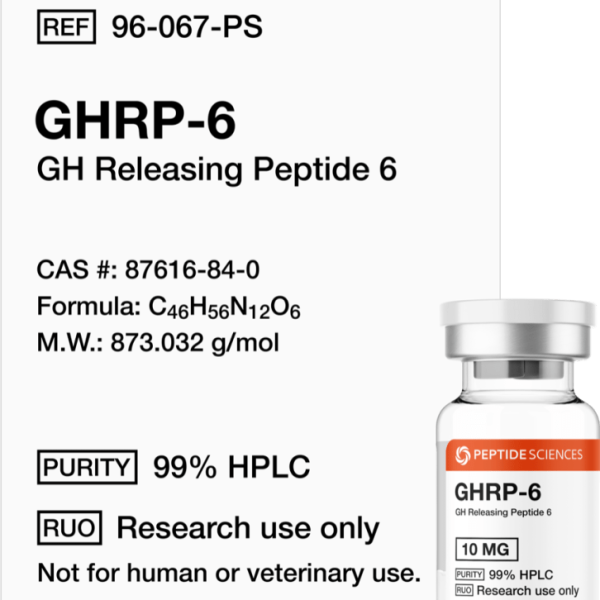
Researchers studying hexarelin cjc 1295 signaling may compare this formulation with the CJC-1295 No DAC + GHRP-6 10mg research blend to evaluate differences between Hexarelin and GHRP-6 within a related GHRH/GHS research framework.
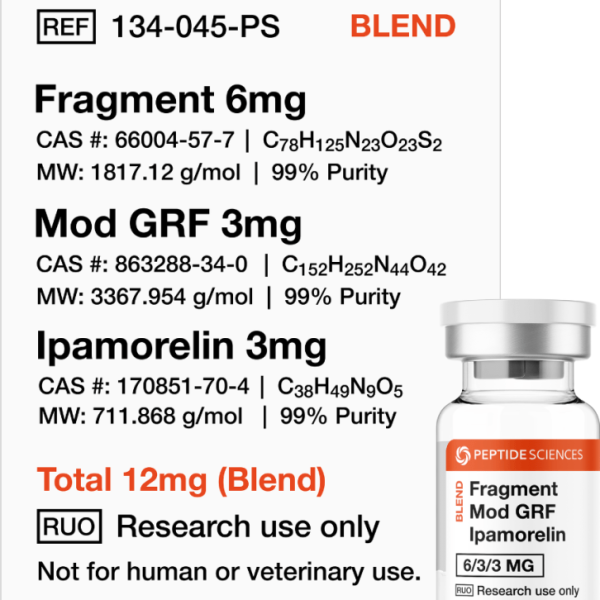
The Fragment + Modified GRF + Ipamorelin 12mg research blend provides another multi-compound platform incorporating Modified GRF and a different growth hormone secretagogue.
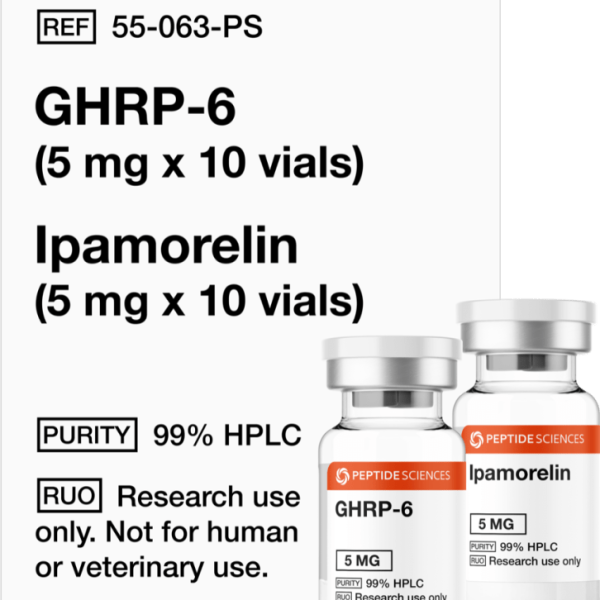
Researchers may also compare the blend with the Ipamorelin 2mg x 10 + CJC-1295 No DAC 2mg x 10 research kit to study differences between Ipamorelin and Hexarelin secretagogue pharmacology.
For external scientific evidence, review Hexarelin, GHRH, GHS-R and CD36 research on PubMed.
Hexarelin CJC 1295 FAQ
What is hexarelin cjc 1295?
Hexarelin cjc 1295 refers here to a 10mg research blend combining Hexarelin with CJC-1295 No DAC, also commonly described as Modified GRF (1-29).
The compounds provide GHS-R-associated and GHRH-receptor-associated research pathways.
What is Hexarelin?
Hexarelin is a synthetic hexapeptide growth hormone secretagogue related structurally to GHRP-6.
Its sequence is:
His-D-2-Methyl-Trp-Ala-Trp-D-Phe-Lys-NH₂
Is Hexarelin an agonist or antagonist?
Hexarelin is studied as a growth hormone secretagogue receptor agonist, not an antagonist.
The description of Hexarelin as a GHS-R1a antagonist would therefore be incorrect.
What is CJC-1295 No DAC?
CJC-1295 No DAC is the marketplace name commonly used for Modified GRF (1-29), a modified GHRH analogue without the albumin-binding DAC group.
Is CJC-1295 No DAC identical to original CJC-1295?
No.
Original CJC-1295 contains a Drug Affinity Complex designed for albumin binding.
Modified GRF (1-29), commonly marketed as CJC-1295 No DAC, lacks that modification.
Why combine Hexarelin and CJC-1295 No DAC?
The compounds activate different receptor systems.
CJC-1295 No DAC/Modified GRF activates GHRH-associated signaling, while Hexarelin acts through GHS-R-associated mechanisms.
This gives hexarelin cjc 1295 value as a dual-receptor research matrix.
Are Hexarelin and GHRH signaling synergistic?
Published human studies have observed true synergistic GH responses when Hexarelin and GHRH were administered together under certain experimental conditions.
However, synergy depends on experimental context and can diminish after repeated stimulation.
The exact USA Peptide Sciences blend should therefore not be described as guaranteeing a particular response magnitude.
Does Hexarelin suppress somatostatin?
Hexarelin interacts with physiological systems influenced by somatostatinergic tone.
Research shows that somatostatin can blunt Hexarelin responses, while combined Hexarelin/GHRH signaling may remain substantial under certain conditions.
It is more accurate to describe this relationship as interaction with somatostatin-mediated regulation rather than universal suppression.
Does Hexarelin bind CD36?
Yes.
Published research identified CD36 as a specific peripheral binding protein for Hexarelin and mapped a Hexarelin-binding region within the CD36 molecule.
Why is CD36 important in Hexarelin research?
CD36 is expressed in several cell types, including cardiovascular tissues.
Its interaction with Hexarelin provides a mechanism for studying peripheral Hexarelin signaling that is distinct from classical pituitary GHS-receptor activity.
Is Hexarelin studied in cardiac models?
Yes.
Hexarelin has been investigated in experimental cardiovascular and myocardial models, including mouse models of myocardial infarction and studies of cardiac receptor signaling.
These findings remain research observations and do not establish cardiovascular treatment effects in humans.
Does Hexarelin cause receptor desensitization?
Repeated Hexarelin stimulation has produced reduced subsequent secretory responses in some experimental studies.
This makes receptor responsiveness and refractory signaling legitimate research endpoints.
What does hexarelin acetate peptide mean?
Hexarelin acetate peptide refers to Hexarelin supplied specifically in an acetate salt form.
The product information provided here does not verify the acetate counterion for this blend, so USA Peptide Sciences should not claim an acetate form unless batch-specific analytical or manufacturing documentation confirms it.
What does hexarelin peptide buy mean?
Hexarelin peptide buy is a transactional research-supply search phrase.
USA Peptide Sciences supplies Hexarelin-containing material solely for qualified laboratory research and not human administration.
What does hexarelin reddit mean?
Hexarelin reddit generally refers to online community discussions about the compound.
Reddit posts and anecdotal experiences are not reliable substitutes for controlled studies, PubMed literature or batch-specific analytical testing.
Is Hexarelin more potent than GHRP-6?
Historical pharmacological literature characterizes Hexarelin as a potent GHRP-6 analogue.
However, potency comparisons depend on assay design, receptor system, concentration and experimental species.
How much material is in the blend?
The supplied information states a 10mg total lyophilized blend.
The individual quantity of CJC-1295 No DAC and Hexarelin was not provided, so this page does not assume a 5mg/5mg ratio.
What purity is the Hexarelin CJC-1295 blend?
According to the supplied specifications, the hexarelin cjc 1295 blend has a stated purity profile of 99% or greater, with HPLC and Mass Spectrometry used for analytical evaluation.
Does the blend include a Certificate of Analysis?
Yes.
According to the supplied product information, each order includes batch-specific Certificate of Analysis documentation.
How should the blend be stored?
According to the supplied specifications, lyophilized material should be stored at -20°C.
Following controlled laboratory preparation into solution, the specified storage range is 2°C to 8°C.
What related research peptides can laboratories compare with Hexarelin?
Researchers can compare this hexarelin cjc 1295 matrix with CJC-1295 No DAC + GHRP-6 10mg, Fragment + Modified GRF + Ipamorelin 12mg and Ipamorelin + CJC-1295 No DAC research vials in appropriately designed comparative experiments.
Where can researchers find Hexarelin studies?
Researchers can review Hexarelin CJC 1295 pathway research on PubMed for literature involving Hexarelin, GHRH, growth hormone secretagogues, GHS receptors, somatostatin, CD36 and cardiovascular research.
Is hexarelin cjc 1295 intended for human use?
No.
Hexarelin cjc 1295 supplied by USA Peptide Sciences is strictly laboratory research material.
It is not intended for human or veterinary consumption, growth-hormone enhancement, bodybuilding, athletic performance, anti-aging use, cardiovascular treatment, therapeutic administration or clinical diagnostics.
Hexarelin CJC 1295 Research Use Disclaimer
The CJC-1295 No DAC + Hexarelin 10mg Blend distributed by USA PEPTIDE SCIENCES is designated strictly for laboratory research purposes only.
The phrase hexarelin cjc 1295 throughout this page refers solely to controlled scientific research involving Modified GRF (1-29), Hexarelin and their associated signaling pathways.
This product is not intended for human or veterinary consumption, growth-hormone enhancement, bodybuilding, athletic-performance enhancement, anti-aging treatment, cardiovascular treatment, clinical diagnostics or therapeutic administration.
All handling, measurement and experimental evaluation must be conducted exclusively by qualified scientific professionals within an appropriate controlled research environment.
Hoyt –
I’ve been studying GH secretagogues and this is the most potent GHRH+GHRP combination available. The literature shows Hexarelin generates peak GH of 40-80 mcg/L as monotherapy, far exceeding Ipamorelin (15-30 mcg/L) or GHRP-2 . When combined with CJC-1295, the synergy produces even higher amplitudes. The CD36 cardioprotective pathway is a unique research angle not shared by other GHRPs . I followed a short 4-week protocol at 100mcg each, 1-2 times daily, and observed robust GH pulse dynamics. The 10mg blend is practical for research cycles.
Virginie –
Shipping was prompt but arrived with less insulation than preferred. I observed high-amplitude GH pulses, but the desensitization timeline is a key research limitation: animal studies show GH response to Hexarelin declines after 15 days of twice-daily dosing and vanishes by 30 days . This requires strict cycling (2-4 weeks on, 4 weeks off) that complicates extended research protocols. Good product, but the rapid attenuation and hormonal profile were considerations.
Jess –
First time using this pairing and I’m impressed. Support walked me through handling and the important research considerations: Hexarelin elevates cortisol and prolactin alongside GH, and GH response attenuates after about 2-4 weeks of daily use. I dosed 100-200mcg each, timed before bed and fasted, and observed the expected high-amplitude GH pulse and rapid recovery effects. The intense GH release produced transient lightheadedness consistent with Hexarelin’s known effects—researchers report feeling a “rush” or “close to passing out” sensation that confirms potency. Great product for short-term research.
Keshawn –
Boyd –
Ordering was smooth and the blend arrived with proper cold-chain packaging. CJC-1295 no DAC activates the GHRH receptor with a ~30-minute half-life to preserve natural pulsatile secretion, while Hexarelin is the most potent GHRP, producing peak GH concentrations approximately 2.5 times higher than GHRH at equivalent doses . The combination produces synergistic GH release: co-administration of GHRH + GHRP yields GH peaks 2-3 times higher than the sum of individual responses . Beyond GH, Hexarelin also binds the CD36 receptor on cardiomyocytes, providing direct cardioprotective effects—reducing infarct size by 25-40% in ischemia-reperfusion models via GH-independent signaling . I observed the expected high-amplitude GH pulse and recovery markers in my research.
Heather –
The quality is solid, but I was mindful that no published human randomized trial has tested this specific CJC-1295 no DAC + Hexarelin combination at community protocols . The no-DAC version has no dedicated human study, and all protocols are extrapolated from Teichman 2006 (which studied the DAC version) and community experience . Theoretical risks include IGF-1-related mitogenic concerns and the well-documented GH-induced insulin resistance . After several weeks I observed GH pulse effects, but the evidence gaps and desensitization were drawbacks.