
Peptide Sciences BPC 157, TB-500 10mg (Blend)
$120.00
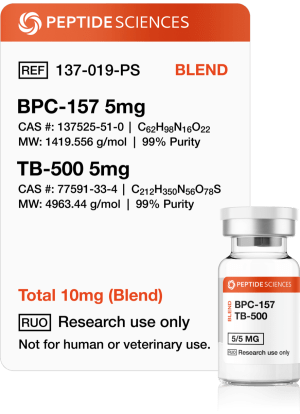
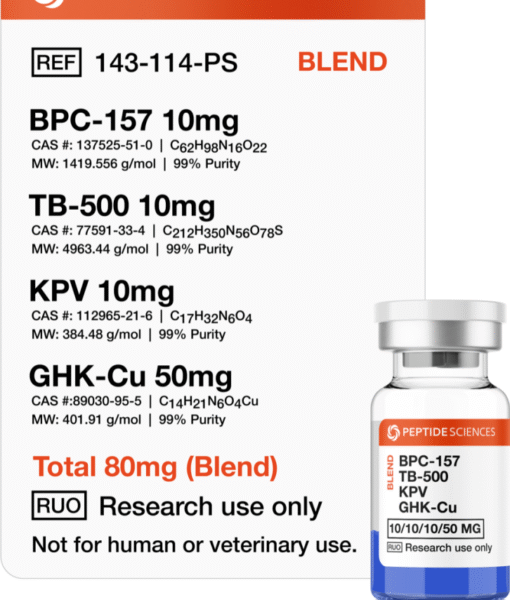
BPC-157 TB-500 blend 10mg ,5mg BPC-157 (Body Protection Compound) + 5mg TB-500 (Thymosin Beta-4 fragment) per vial. Dual-pathway tissue repair research blend. Lyophilised powder. ≥99% purity by HPLC-MS. Third-party tested — Janoshik Analytical. COA verified per batch. USA-manufactured. $120.00 | In stock. For laboratory research use only.
Peptide Sciences BPC 157 + TB-500 10mg Research Blend
What Is the Peptide Sciences BPC 157 TB-500 Blend?
The BPC-157 TB-500 blend combines two extensively researched tissue-repair peptides into a single 10mg vial — 5mg of BPC-157 (Body Protection Compound, a 15-amino acid gastric pentadecapeptide) and 5mg of TB-500 (a synthetic fragment of thymosin beta-4). BPC-157 drives localized vascular healing and nitric oxide signalling while TB-500 enables systemic cellular migration and actin organisation.
For researchers searching peptide sciences bpc 157, this dual-compound formulation provides a standardized 1:1 research matrix containing BPC-157 and TB-500 in one lyophilized vial.
Introduction to the Peptide Sciences BPC 157 Dual-Action Regenerative Matrix
The BPC-157 TB-500 blend is designed to evaluate complex compound synergy across mammalian tissue repair, wound healing, and musculoskeletal recovery models. Rather than targeting an isolated cellular mechanism, this advanced 10,000mcg blend unifies two distinct synthetic peptide architectures: a stable gastric pentadecapeptide and a functional thymosin beta-4 fragment. At USA PEPTIDE SCIENCES, we supply this BPC-157 TB-500 blend in a precisely calibrated, vacuum-sealed lyophilized form, providing orthopedic, pathology, and molecular biology laboratories with a reliable vehicle to map synchronized cellular migration, endothelial proliferation, and structural tissue rebuilding cycles without the risks of cross-contamination from manual multi-vial mixing.
The peptide sciences bpc 157 research configuration allows laboratories to investigate BPC-157 alongside TB-500 within a controlled dual-peptide environment.
Peptide Sciences BPC 157 TB500 Research Overview: Multi-Pathway Tissue Repair and Synergy
The primary scientific value of the BPC-157 TB-500 blend combination centers on the physiological concept of cascading signaling network amplification. In native biological models, structural injuries to tendons, ligaments, and muscle tissue engage multiple, overlapping cellular networks. This blend allows researchers to track steady-state data across distinct healing pathways simultaneously.
BPC 157 Peptide Science Research Pathways
Key areas of active scientific investigation utilizing this dual-action research blend include:
- Accelerated Angiogenesis and Endothelial Migration: Modeling the structural formation of new microvascular networks. The blend unifies the angiogenic signaling of BPC-157 TB-500 blend to study the upregulation of vascular endothelial growth factor (VEGF) and the subsequent recruitment of endothelial cells. This combination is highly scrutinized for its capacity to accelerate the proliferation of capillaries into ischemic or avascular tissue zones.
- Actin Polymerization and Cytoskeletal Dynamics: Evaluating cellular locomotion mechanics during injury resolution. By introducing the direct cellular transport optimization properties of the GHR peptide variant BPC-157 TB-500 blend, researchers are able to track how the regulation of globular actin (G-actin) into filamentous actin (F-actin) accelerates cellular motility, allowing defensive and structural cells to rapidly populate a wound matrix.
- Extracellular Matrix (ECM) Remodeling and Collagen Alignment: Investigating the deposition, maturation, and tensile alignment of structural tissue matrices. Researchers analyze the downstream impact of both compounds on modulating matrix metalloproteinases (MMPs) and upregulating growth factors. Studies focus on optimizing regular, parallel collagen filament cross-linking while actively discouraging the disorganized fibrotic accumulation typical of scarring.
- Inflammatory Cascade Attenuation: Analyzing the combined suppression of localized stress pathways. Investigators utilize this specific formulation to measure downregulations in pro-inflammatory cytokines and trace the inhibition of chronic oxidative stress markers, evaluating the blend’s role in establishing a homeostatic microenvironment favorable to tissue regeneration.
Researchers investigating peptide sciences bpc 157, TB-500, thymosin beta-4 signaling, cellular migration, angiogenesis, and tissue-remodeling pathways can review peptide sciences bpc 157 research literature on PubMed for additional peer-reviewed scientific publications.
Peptide Sciences BPC 157 TB-500 Compound Profiles
To support rigorous, repeatable analytical trials, the 10mg blend is manufactured to an exact 1:1 quantitative ratio featuring two highly verified research sequences (BPC-157 TB-500 blend):
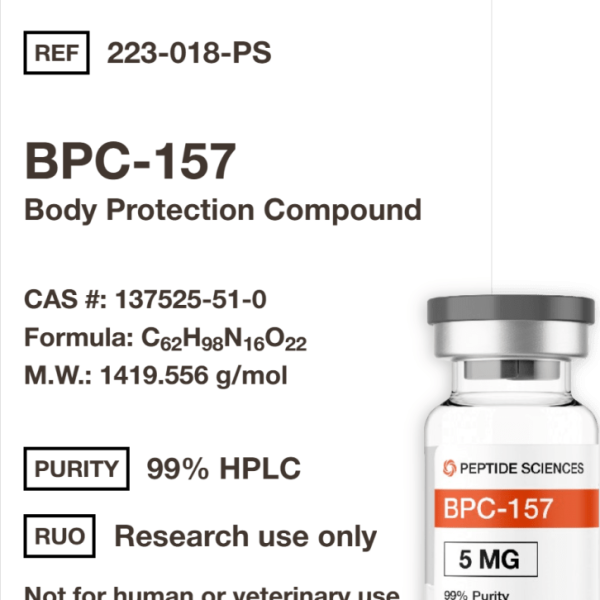
- BPC-157: A synthetic sequence representing the fully functional fragment of human gastric juice protein, optimized for extreme chemical stability in liquid environments and recognized for its extensive cytoprotective properties across soft tissue models.
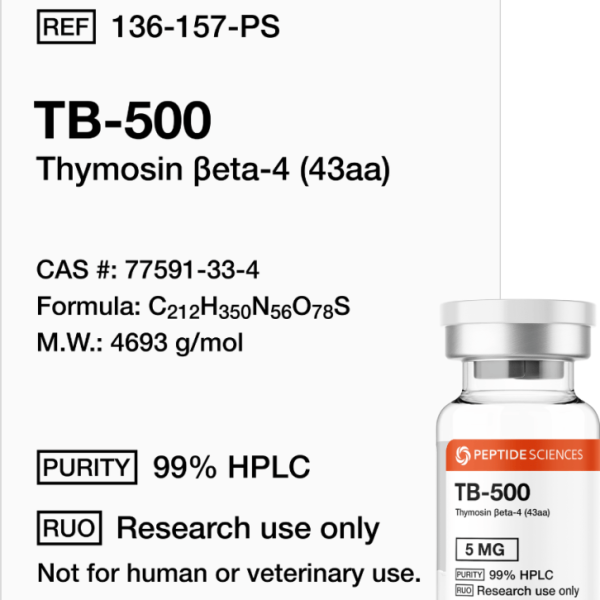
- TB-500: A synthetic fragment of the endogenous protein thymosin beta-4 ($\text{Ac-Ser-Asp-Lys-Pro-Leu-Met-Gly-Met-Glu-Lys-Gln-Val-Glu-Lys-Ser-Asn-Gly-Ile}$) engineered to optimize cell-autonomous migration and wound healing dynamics via G-actin binding.
Researchers studying bpc 157 peptide science can also compare the blend with standalone Peptide Sciences BPC 157 5mg research peptide, Peptide Sciences BPC 157 10mg research peptide, and Peptide Sciences BPC 157 15mg research peptide.
Peptide Sciences BPC 157 Quality Standards & Analytical Testing
At USA PEPTIDE SCIENCES, laboratory data integrity and compound reproducibility are the fundamental core of our manufacturing operations. Every single production lot of the BPC-157 TB-500 blend 10mg undergoes a severe quality control validation protocol to eliminate compounding variables and experimental artifacts. We utilize High-Performance Liquid Chromatography (HPLC) coupled with Mass Spectrometry (MS) to confirm an absolute chemical purity profile of 99% or greater across both active chemical compounds within the matrix. This rigorous analytical validation verifies the precise amino acid sequence layouts, exact molecular weights, and correct spatial conformations while ensuring the total absence of residual synthesis reagents, truncated fragments, heavy metals, or raw contaminants. A batch-specific Certificate of Analysis (COA) accompanies every order to guarantee absolute reproducibility.
Researchers can review the supplied peptide sciences bpc 157 and thymosin beta-4 cellular migration study and BPC 157 peptide science tissue-repair research for relevant published literature.
All compounds are independently tested by Janoshik Analytical and supplied with batch-specific COA documentation. View our full Peptide Sciences BPC 157 Quality Assurance standards or browse the complete Peptide Sciences BPC 157 research compound catalogue.
Peptide Sciences BPC 157 Storage and Handling Requirements
To safeguard the complex structural integrity and prevent premature thermal or mechanical breakdown of the BPC-157 TB-500 blend 10mg lyophilized cake, all vials must be stored long-term in a freezer environment at -20°C, completely shielded from light and ambient moisture. Prior to introducing the compound into your laboratory workflow, reconstitution must be carried out using an appropriate sterile, non-pyrogenic, or bacteriostatic diluent. Once transitioned into a liquid solution, the peptide blend exhibits heightened sensitivity to physical shear stress and thermal degradation; reconstituted vials must be maintained under constant refrigeration at 2°C to 8°C. Researchers must dissolve the compound via a slow, gentle swirling motion, avoiding any aggressive mechanical agitation, inversion, or shaking.
Related Peptide Sciences BPC 157 Research Compounds
Researchers working with the BPC-157 TB-500 blend or investigating peptide sciences bpc 157 tb500 may also be interested in these related compounds:
- Peptide Sciences BPC 157 5mg standalone research peptide — standalone BPC-157 for isolated single-compound research protocols.
- Peptide Sciences BPC 157 10mg standalone research peptide — higher-quantity standalone vial for extended laboratory studies.
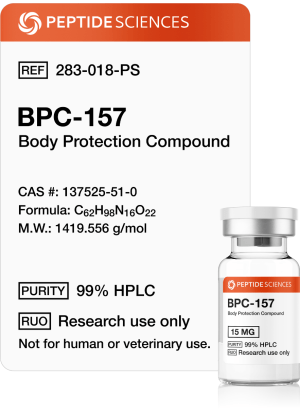
- Peptide Sciences BPC 157 15mg standalone research peptide — higher-concentration standalone research format.
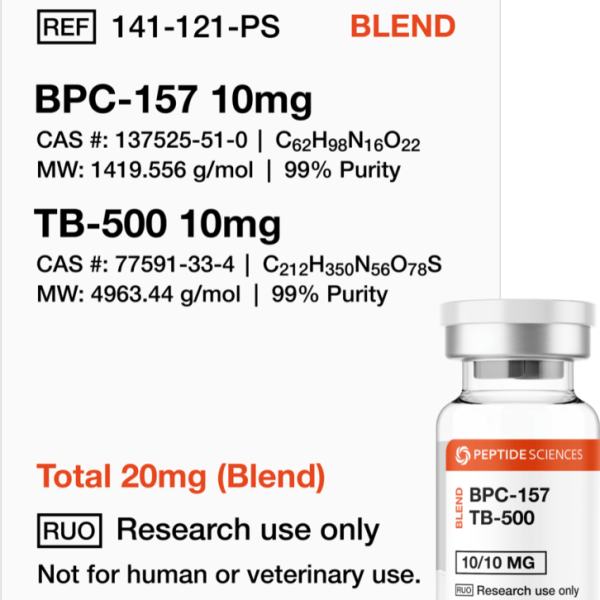
- BPC 157 TB 500 Peptide Sciences 20mg research blend — higher-strength version of the dual-compound formulation.
- Peptide Sciences BPC 157 TB500 + GHK-Cu 30mg Glow Blend — triple-compound blend adding GHK-Cu for extracellular matrix research.
- Peptide Sciences BPC 157 comparison – ARA-290 16mg — related research peptide for cellular and tissue signaling investigations.
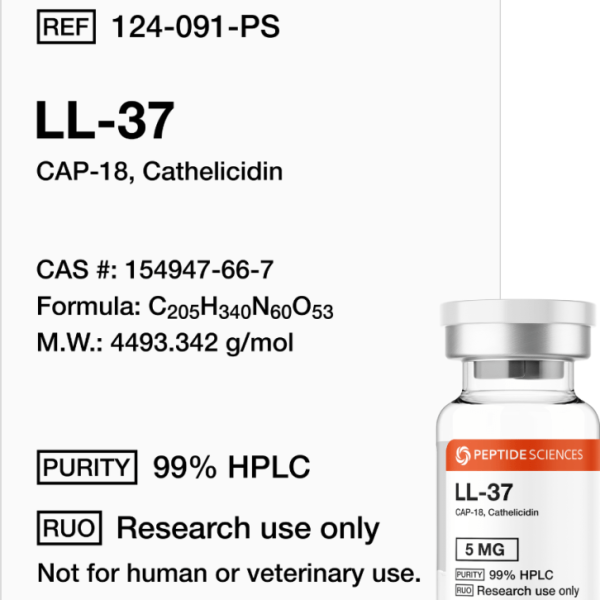
- Peptide Sciences BPC 157 comparison – LL-37 5mg CAP-18 — related peptide investigated in innate immune and cellular research.
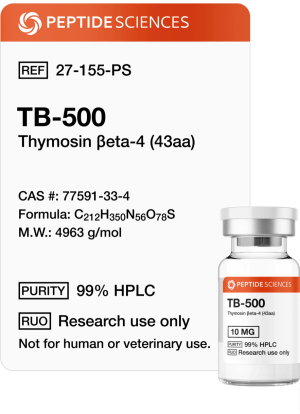
- Peptide Sciences BPC 157 TB500 comparison – TB-500 Thymosin Beta-4 10mg — standalone thymosin beta-4 research material for comparative laboratory studies.
Peptide Sciences BPC 157 FAQ
What is peptide sciences bpc 157?
Peptide sciences bpc 157 is a search phrase associated with research-grade BPC-157 products and peptide research suppliers. This USA Peptide Sciences product combines 5mg BPC-157 with 5mg TB-500 in a 10mg lyophilized research blend.
What is the BPC-157 TB-500 blend?
The BPC-157 TB-500 blend contains two research peptides in a 1:1 ratio: 5mg BPC-157 and 5mg TB-500, providing 10mg total research material.
What does bpc 157 peptide science refer to?
BPC 157 peptide science generally refers to scientific investigation of BPC-157 and its molecular pathways. Laboratory research has examined BPC-157 in cellular signaling, vascular, gastrointestinal, and tissue-model contexts.
What does peptide science bpc 157 mean?
Peptide science bpc 157 is another keyword variation used when searching for scientific information or research products involving BPC-157. The compound on this page is supplied together with TB-500 for dual-compound laboratory research.
What is peptide sciences bpc 157 tb500?
Peptide sciences bpc 157 tb500 refers to research involving BPC-157 and TB-500 together. This product provides both compounds within one 10mg lyophilized matrix.
What does bpc 157 tb 500 peptide sciences refer to?
The phrase bpc 157 tb 500 peptide sciences describes research or product searches involving the combination of BPC-157 and TB-500. USA Peptide Sciences supplies this combination as a 5mg + 5mg research blend.
What is peptide sciences bpc 157 studied for?
Peptide sciences bpc 157 research includes experimental models involving endothelial signaling, nitric oxide pathways, cellular migration, extracellular matrix remodeling, angiogenesis, and related tissue-repair mechanisms.
Why combine BPC-157 with TB-500?
Combining BPC-157 and TB-500 allows researchers to investigate two distinct peptide signaling profiles within one experimental matrix, including endothelial activity, cytoskeletal dynamics, cellular migration, and extracellular matrix pathways.
How much BPC-157 is in the blend?
The peptide sciences bpc 157 research blend contains 5mg of BPC-157 per vial.
How much TB-500 is in the blend?
The same 10mg research vial contains 5mg of TB-500, producing a 1:1 BPC-157 to TB-500 configuration.
What purity is the peptide sciences bpc 157 TB-500 blend?
The supplied product information states that the peptide sciences bpc 157 + TB-500 blend has a chemical purity profile of 99% or greater, with HPLC and Mass Spectrometry used for analytical validation.
Does the BPC-157 TB-500 blend include a COA?
Yes. The supplied product information states that a batch-specific Certificate of Analysis accompanies each order. Researchers can also review the Peptide Sciences BPC 157 Quality Assurance standards.
How should peptide sciences bpc 157 TB-500 be stored?
According to the supplied product information, the peptide sciences bpc 157 TB-500 blend should be stored at -20°C while lyophilized and protected from light and moisture. Following research reconstitution, it should be maintained between 2°C and 8°C.
What standalone BPC-157 products can be compared with this blend?
Researchers can compare the blend with Peptide Sciences BPC 157 5mg, BPC-157 10mg, and BPC-157 15mg in appropriately designed laboratory research.
What related research compounds can be compared with BPC-157 TB-500?
Researchers investigating peptide sciences bpc 157 can also explore ARA-290 16mg, LL-37 5mg CAP-18, and TB-500 Thymosin Beta-4 10mg for comparative laboratory studies.
Can researchers find peptide sciences bpc 157 studies on PubMed?
Yes. Researchers can review peptide sciences bpc 157 scientific literature on PubMed, including the supplied thymosin beta-4 cellular migration research and BPC-157 tissue-repair research.
Is peptide sciences bpc 157 TB-500 intended for human use?
No. Peptide sciences bpc 157 and TB-500 products supplied by USA Peptide Sciences are designated strictly for laboratory research and are not intended for human or veterinary consumption, therapeutic administration, clinical diagnostics, or other human use.
Peptide Sciences BPC 157 TB-500 Research Use Disclaimer
The compounds distributed by USA PEPTIDE SCIENCES, including the BPC-157 TB-500 blend 10mg research vials, are designated strictly for laboratory research purposes only. Under no circumstances are these products approved or intended for human or veterinary consumption, direct clinical diagnostics, or therapeutic drug administration. All handling, measuring, and experimental evaluation must be conducted exclusively by qualified scientific professionals within a certified and monitored research facility.
Bertha –
Support was proactive with handling guidance and shipping was quick. The blend has performed well in my research, with the expected effects aligning with the published literature on these compounds. The 10mg format simplifies logistics compared to handling separate vials. Excellent value and I will be ordering again.
Kathlyn –
The quality seems fine, but the blend format is a double-edged sword—convenient for dosing but you cannot isolate variables. If side effects appear, attribution is impossible . After several weeks of use, results were moderate but I could not determine which peptide was driving the effects. Solid product, but the lack of isolation was a drawback.
Kelton –
Viviane –
Disappointed with this one. The product arrived, but I wasn’t able to determine which component was contributing to the effects in my research—the blend makes it impossible to attribute any outcome to one peptide over the other . I reached out to support for clarification but got a generic response. While both compounds have individual preclinical data, the combination introduces an interaction profile that no study has formally mapped . I might try individual vials next time to isolate variables.
April –
I have been researching tissue repair pathways and this blend is exactly what I needed. The support team was responsive about the complementary mechanisms, noting that BPC-157 influences fibroblast activity while TB-500 facilitates cell migration through actin dynamics . Shipping was prompt with secure packaging. The fixed ratio simplifies research logistics and the 10mg size is convenient for focused studies.
Torrance –
I’m uncertain this blend lived up to expectations for my research. Ordering was fine, but the fixed 1:1 ratio may not match all research protocols . Additionally, no human clinical trials have evaluated this combination for any indication, and the combined safety profile is essentially unknown . For the cost, I expected more clarity on which component was contributing. Three stars for decent shipping.
Clementine –
Shipping was slightly delayed but the product arrived intact. I observed decent results, but I prefer individual vials for dose flexibility since BPC-157 and TB-500 may have different optimal dosing schedules in research protocols. The blend is convenient, but the fixed ratio is a limitation for some research designs.
Caleigh –
I have used several peptide stacks and this BPC-157/TB-500 blend stands out for its research applications. The team answered my questions about the rationale, noting the combination is based on mechanistic complementarity in preclinical models . Shipping was fast with excellent packaging. The blend has performed consistently in my research protocols. Will reorder.
Elizabeth –
Disappointed with this one. The product arrived, but I wasn’t able to determine which component was contributing to the effects in my research—the blend makes it impossible to attribute any outcome to one peptide over the other . I reached out to support for clarification but got a generic response. While both compounds have individual preclinical data, the combination introduces an interaction profile that no study has formally mapped . I might try individual vials next time to isolate variables.
Jonathan –
Ordering was straightforward and the support team provided clear guidance on reconstitution for the 10mg vial. Shipping was fast with proper cold-chain packaging, and the vial arrived clearly labeled. I’ve been using it in research protocols and the mechanistic pairing of BPC-157 for angiogenesis and TB-500 for actin-mediated cell migration is well-supported in the literature . The 1:1 ratio simplifies research logistics significantly.